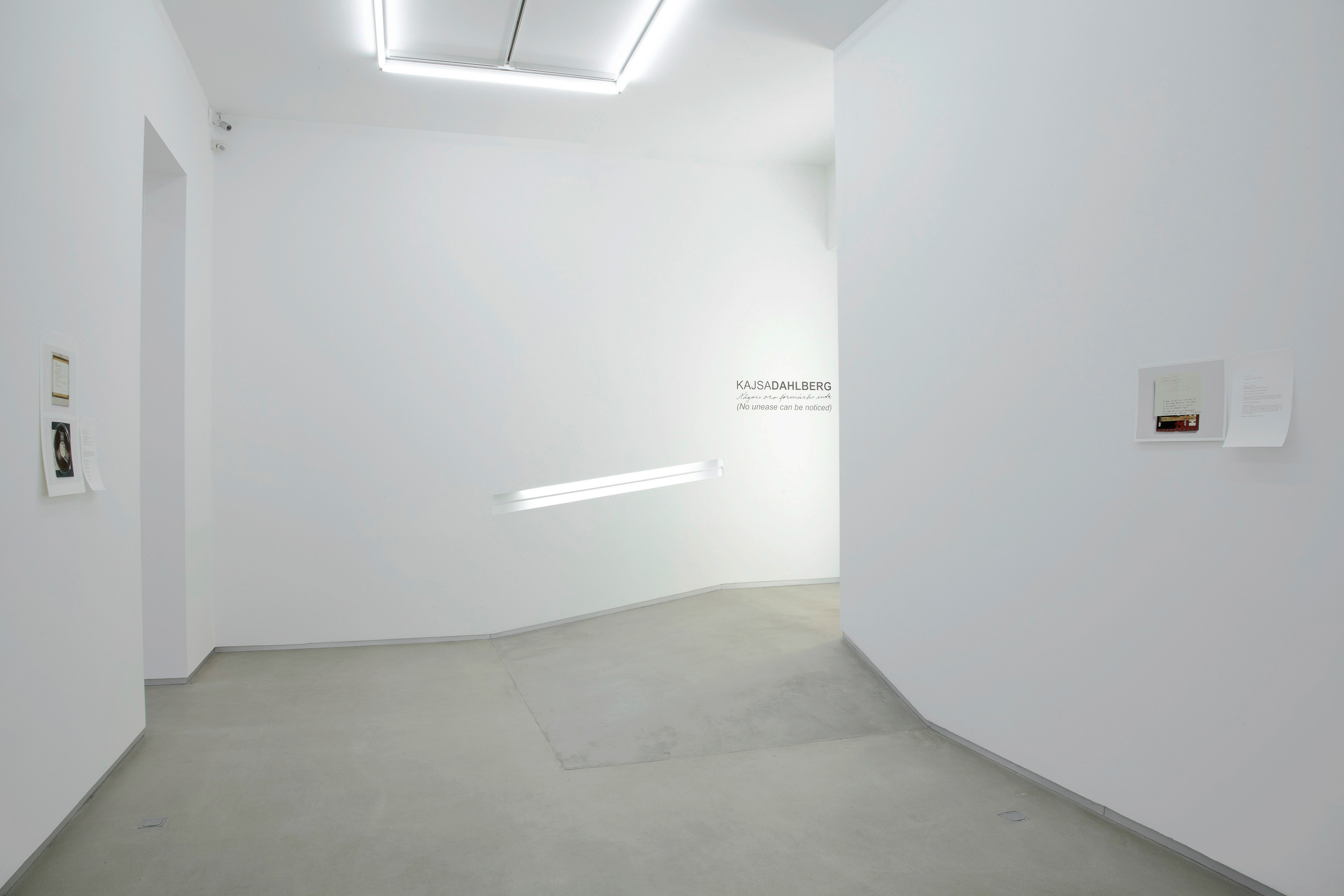
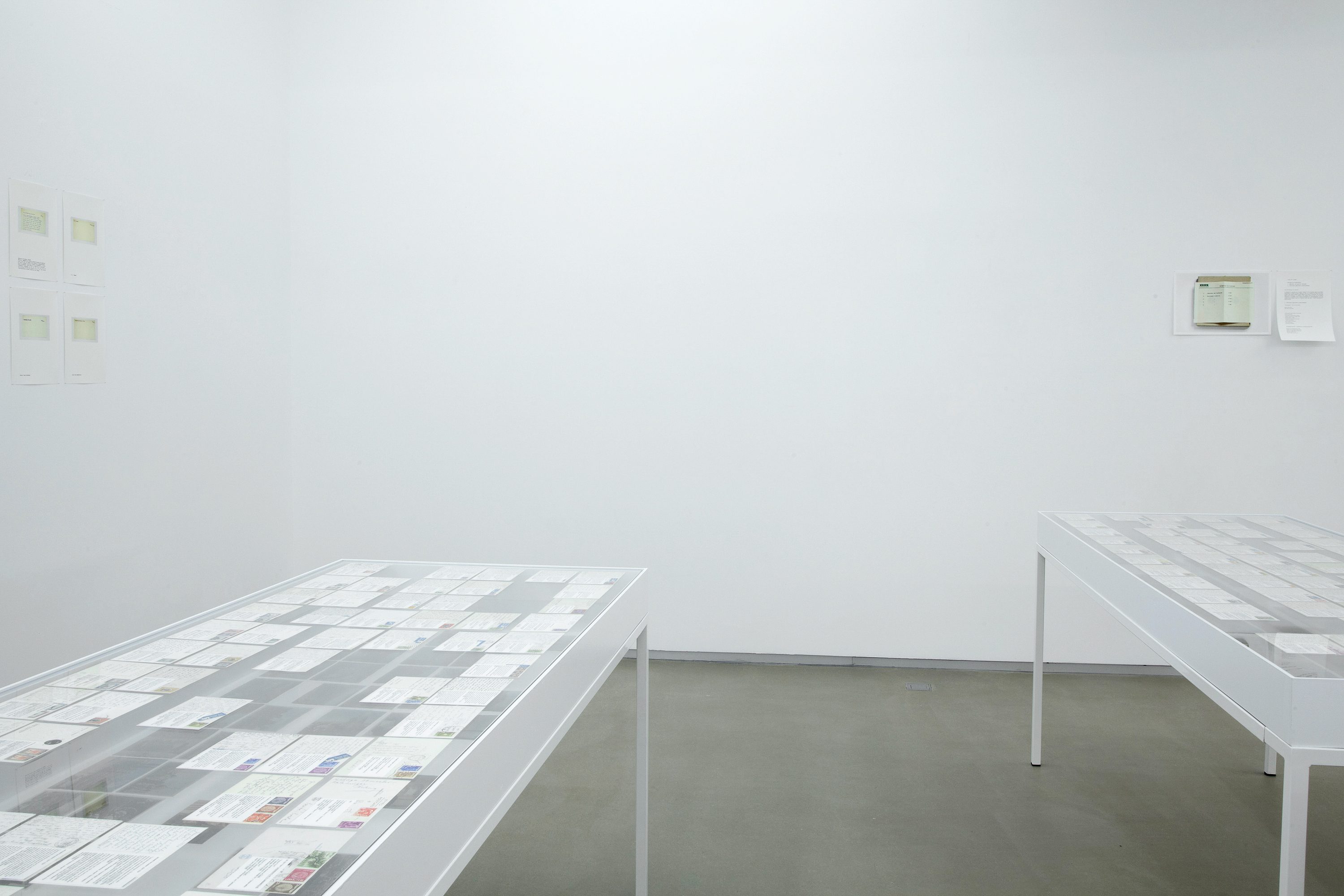
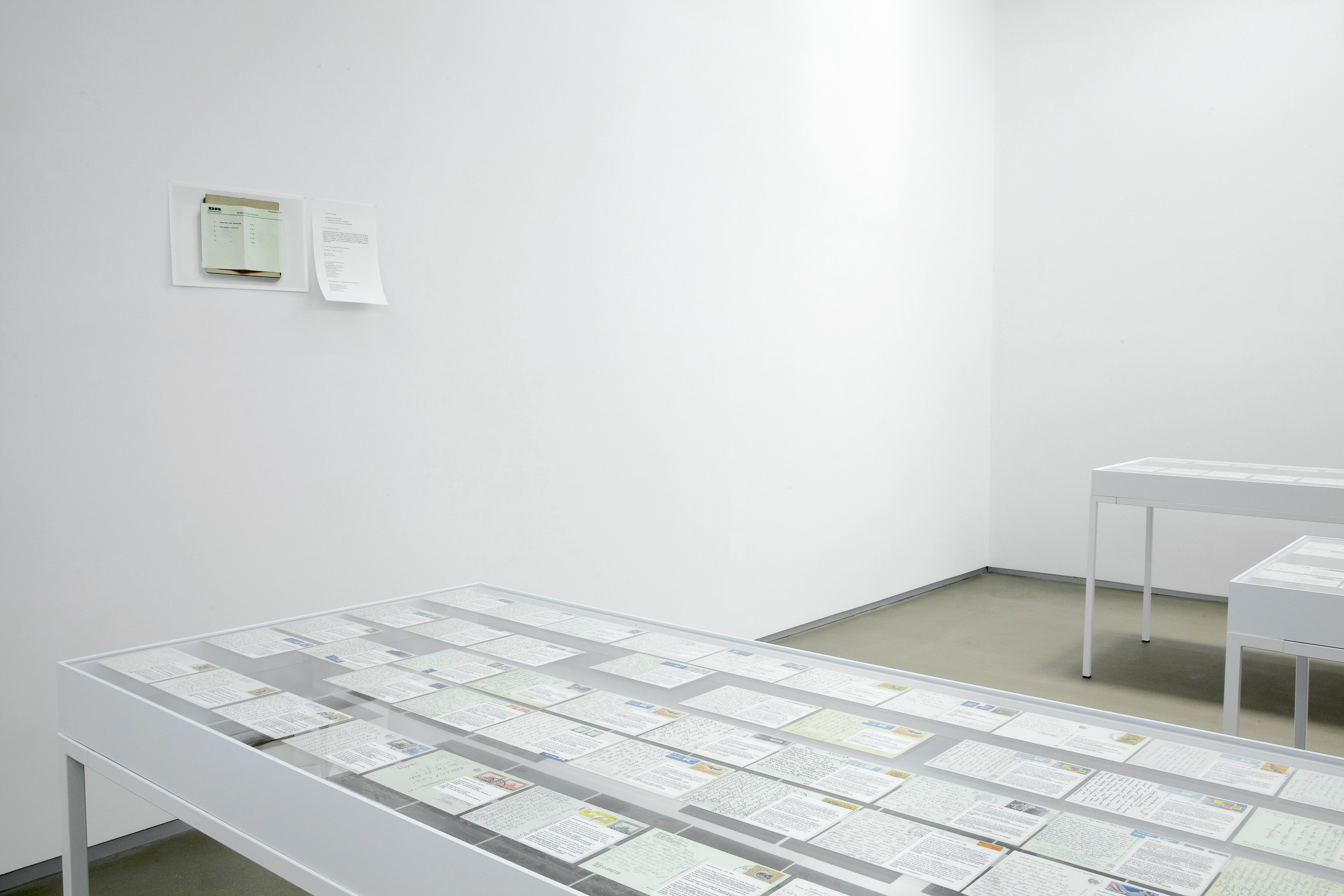
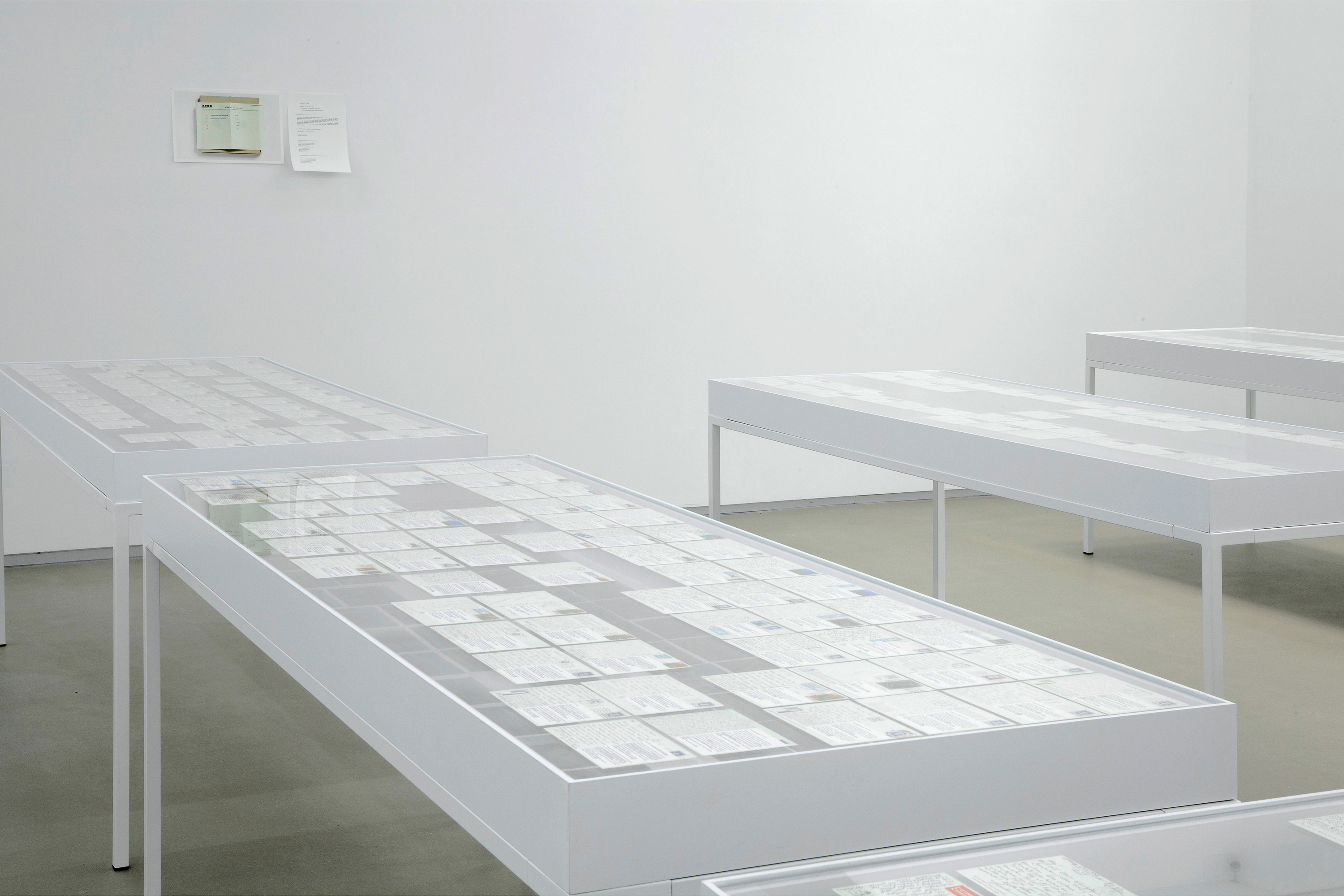
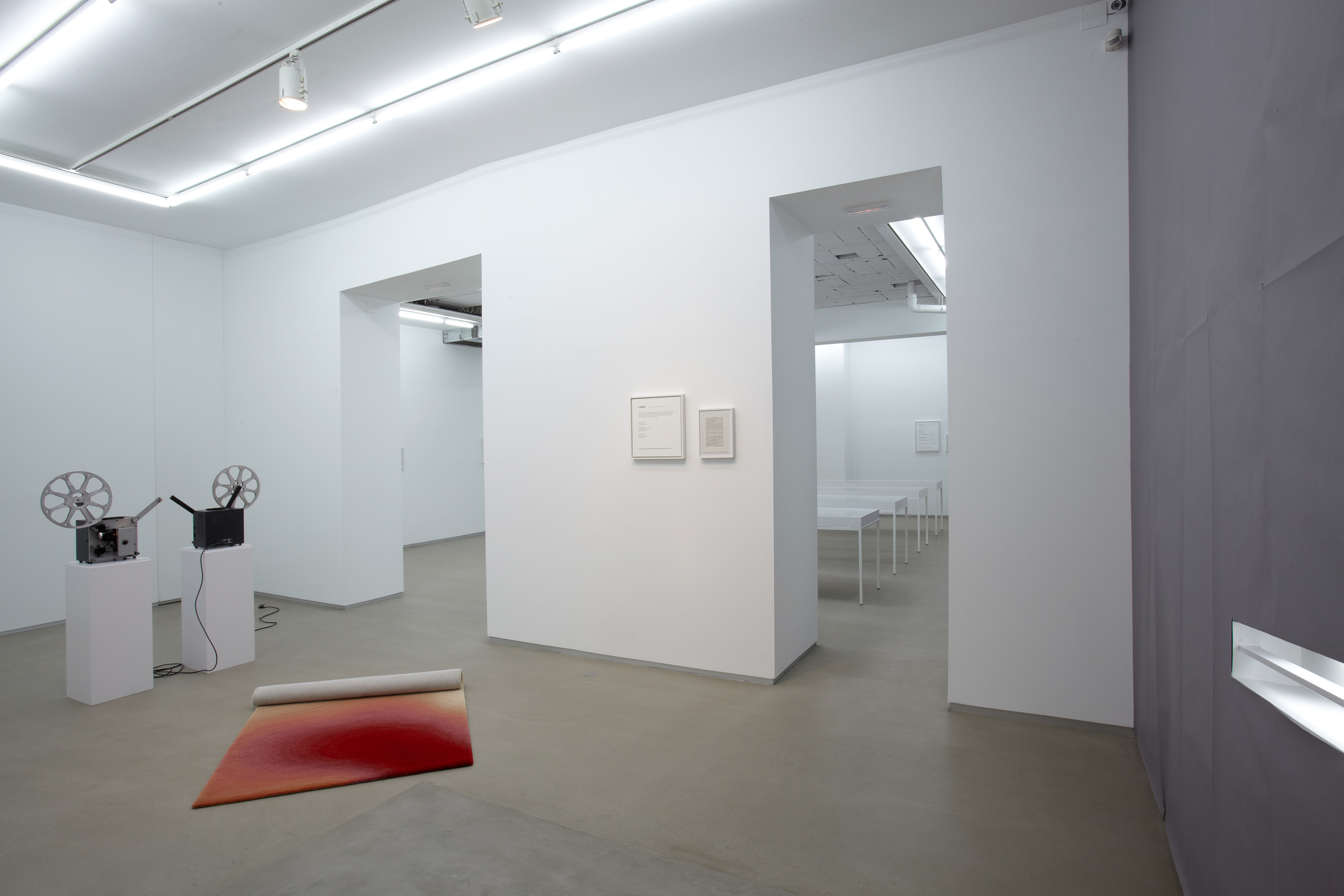
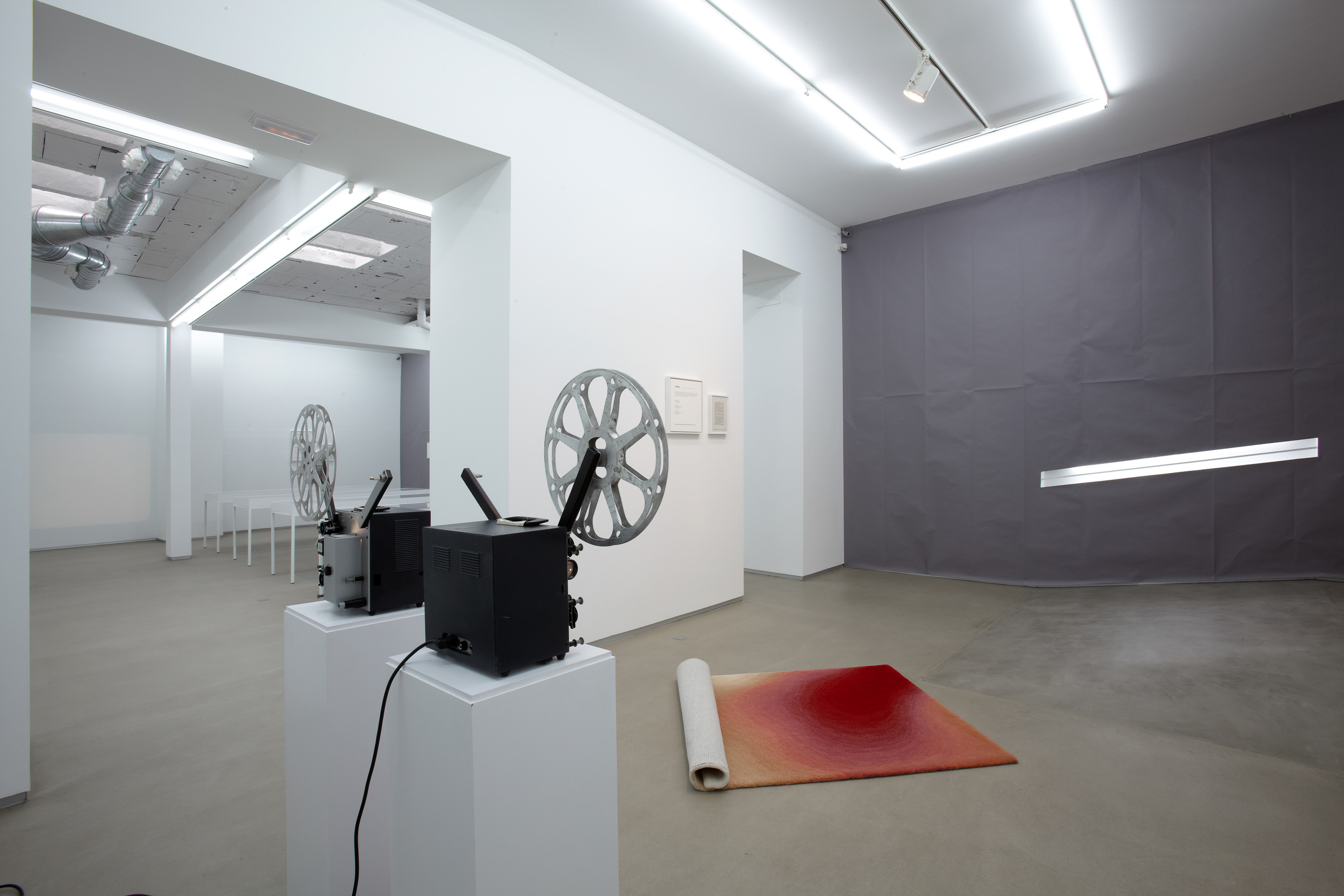
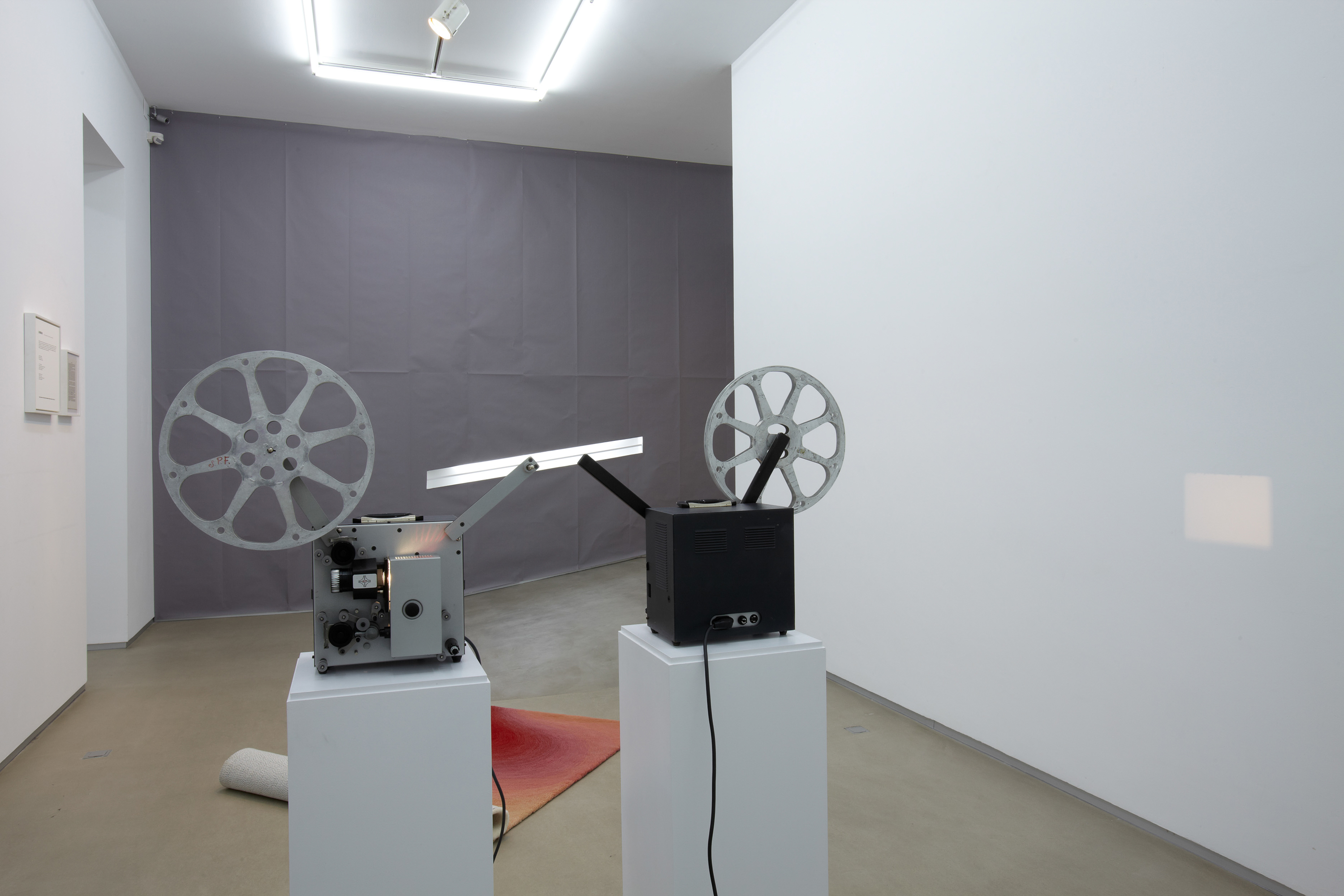
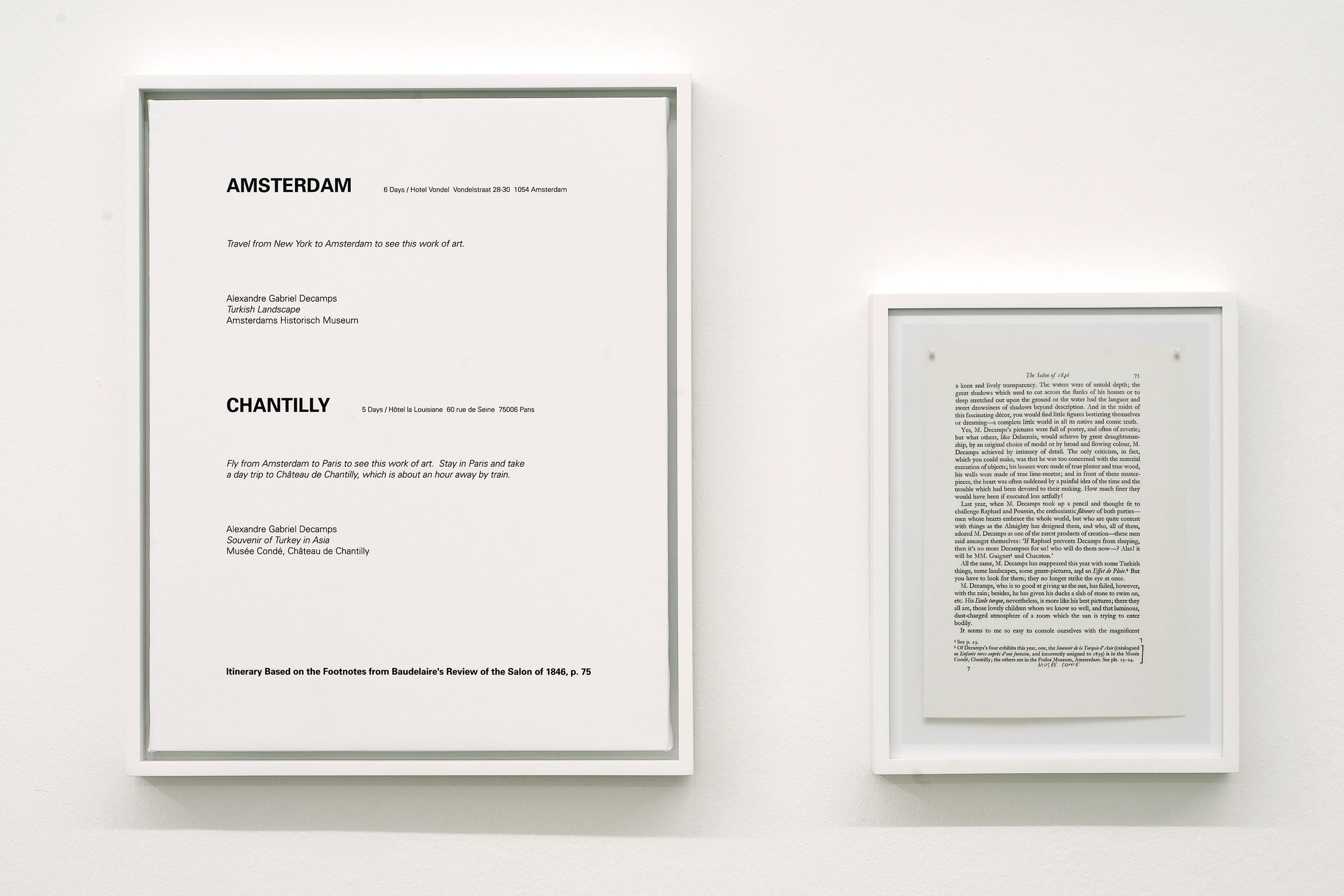
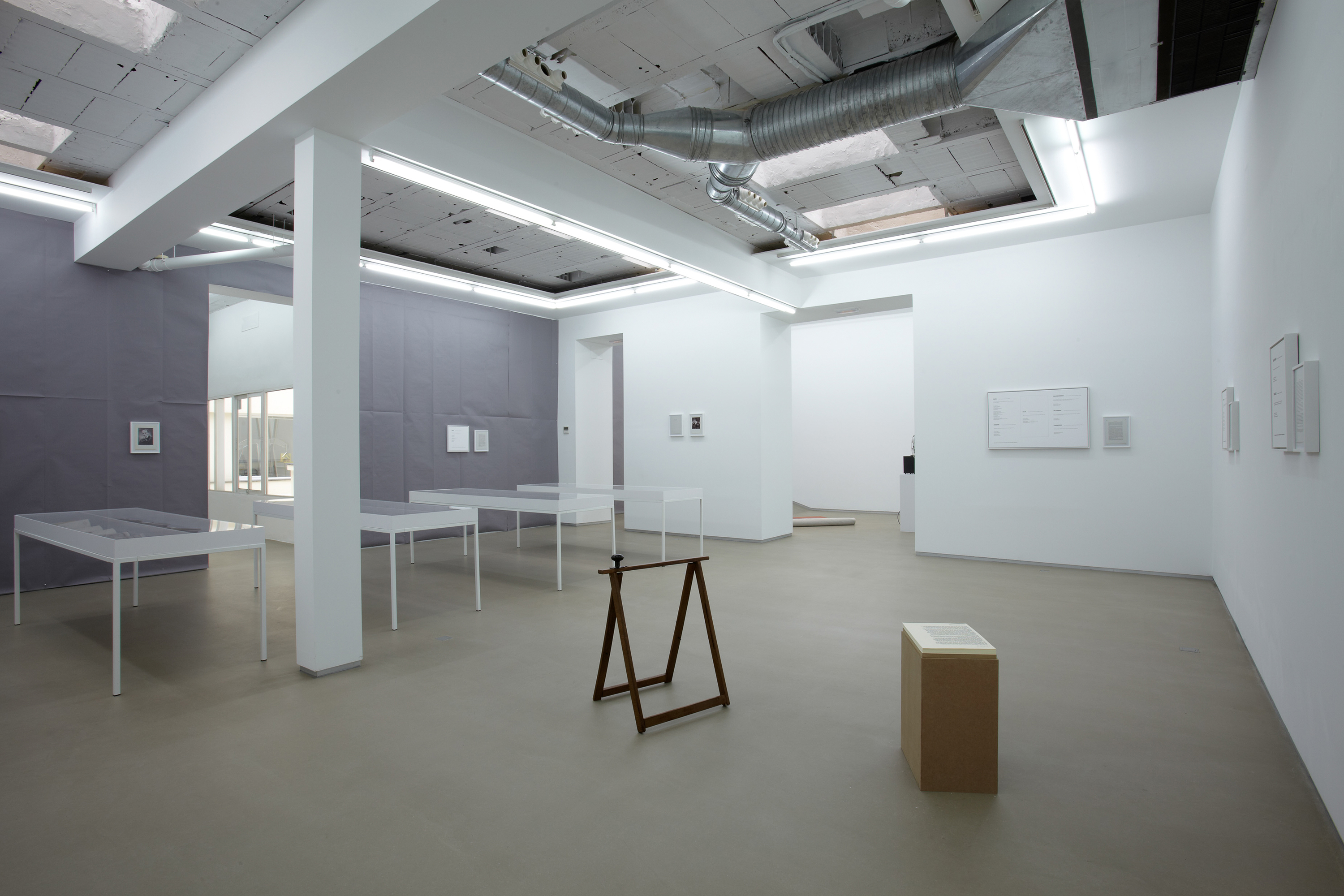
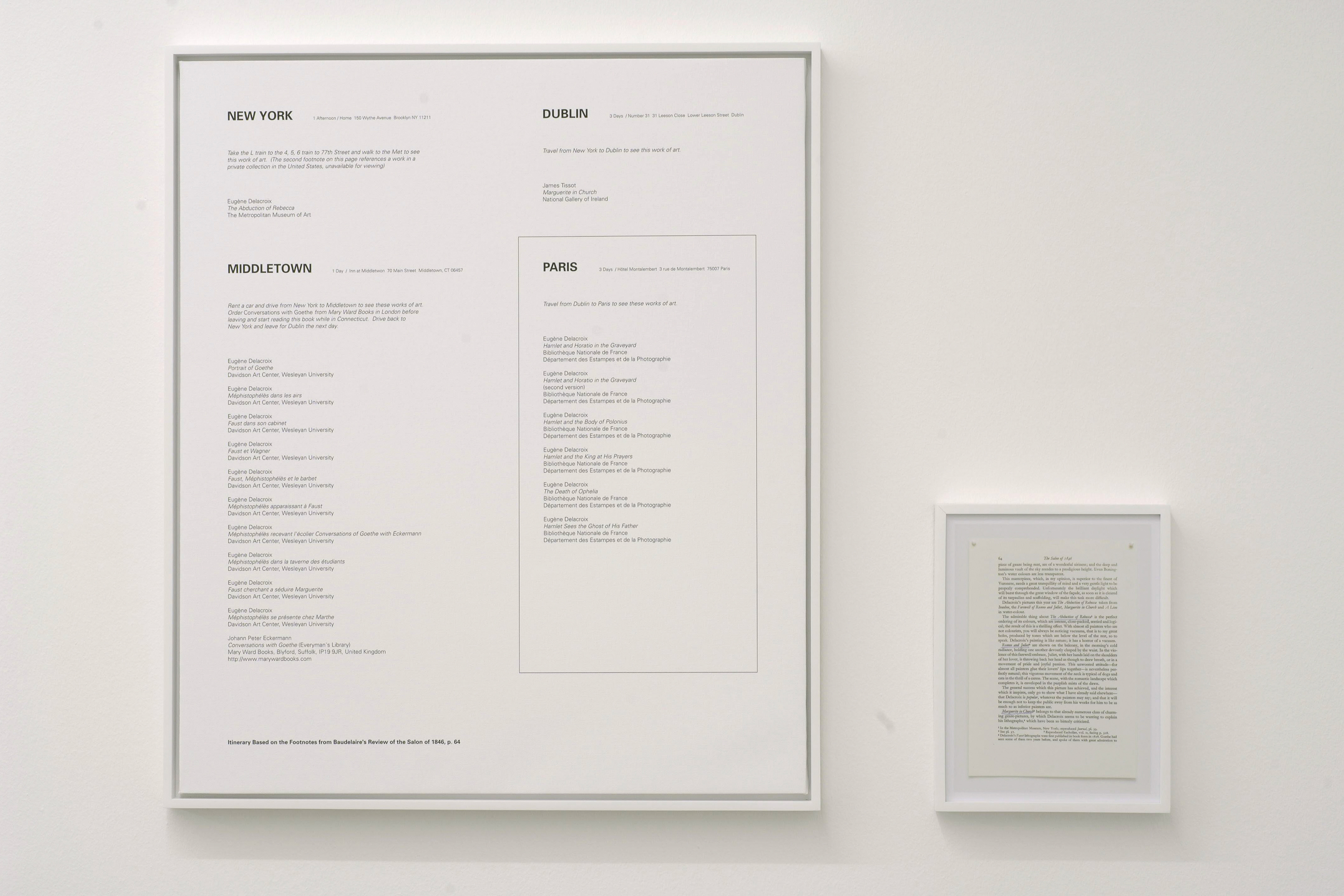
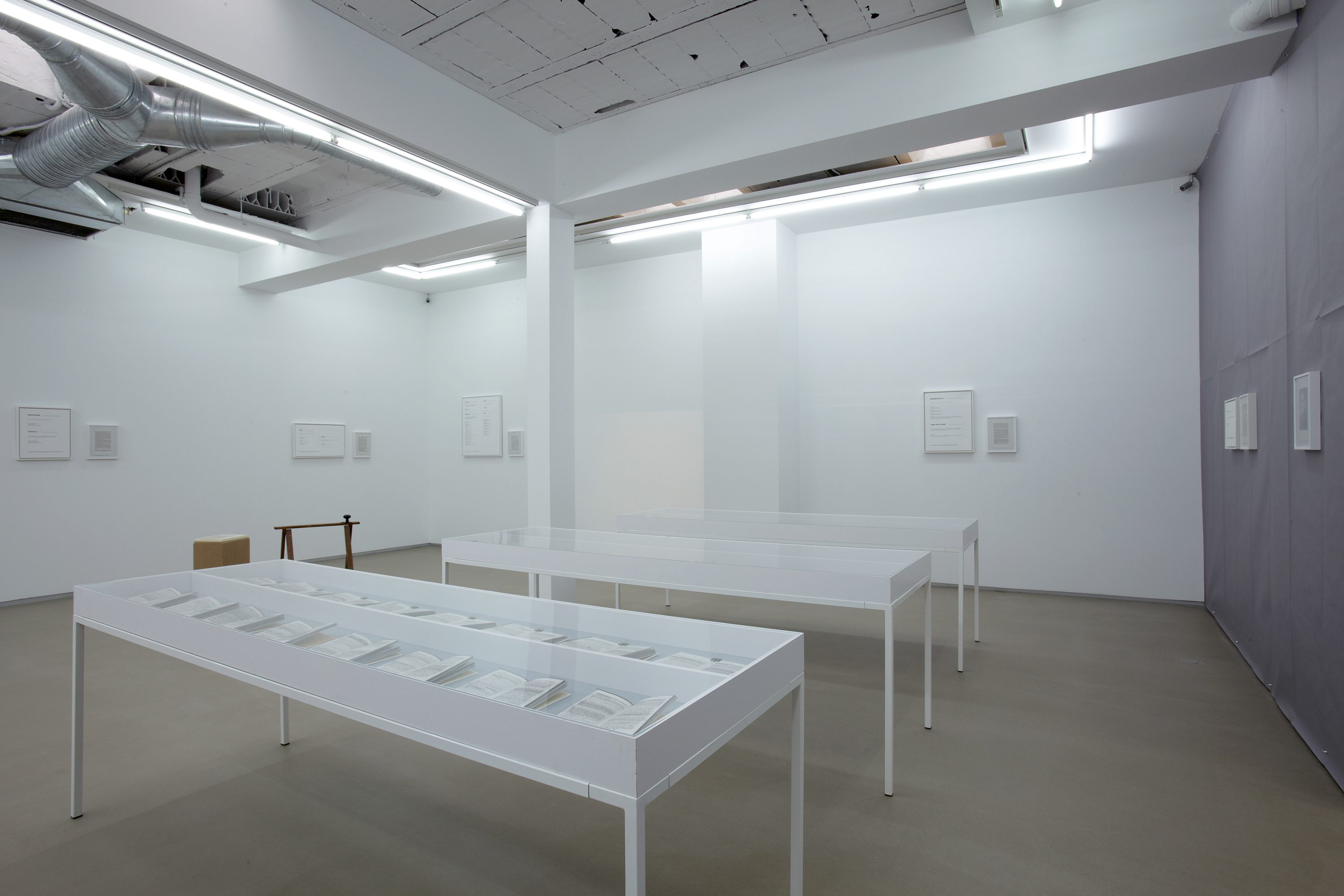
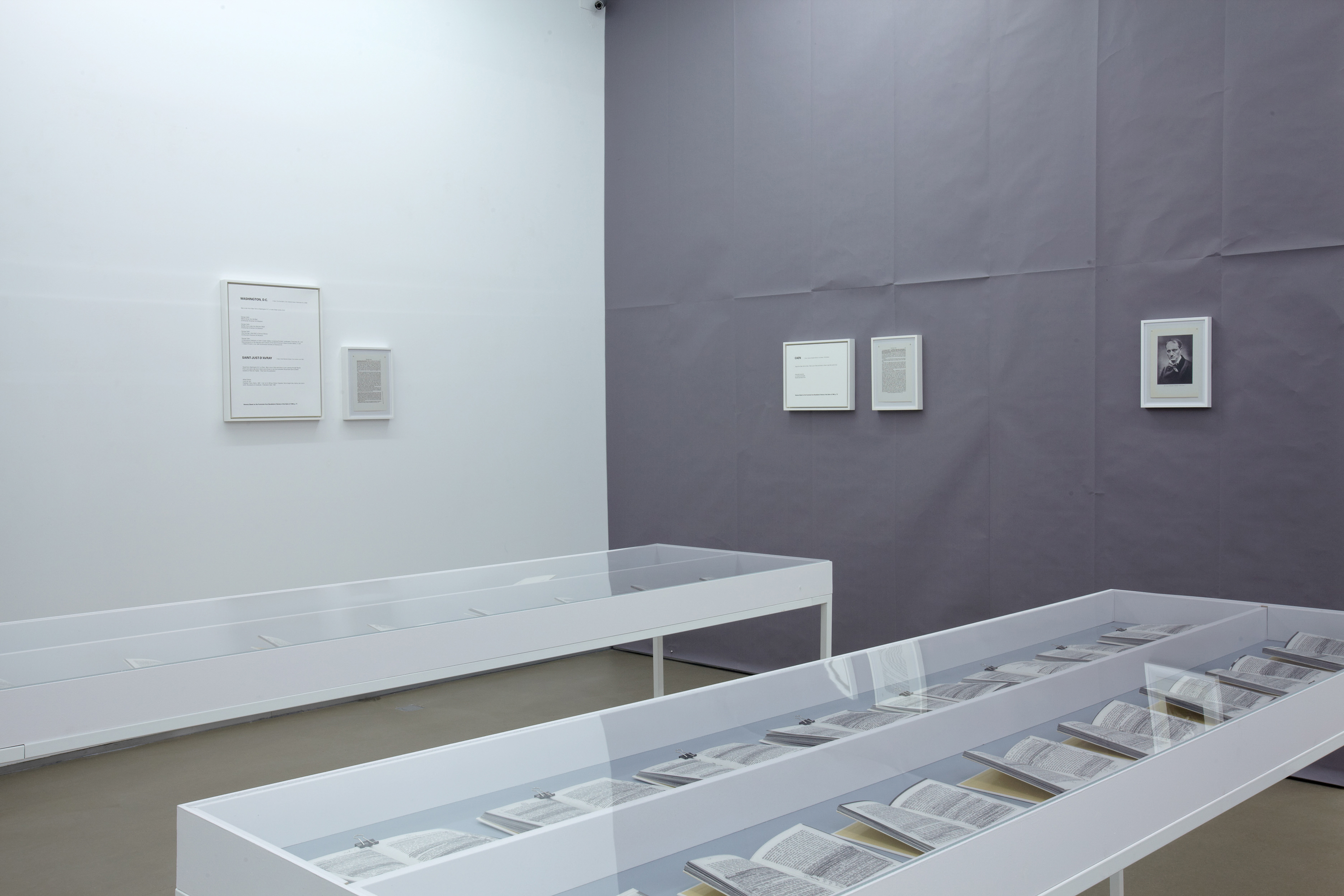
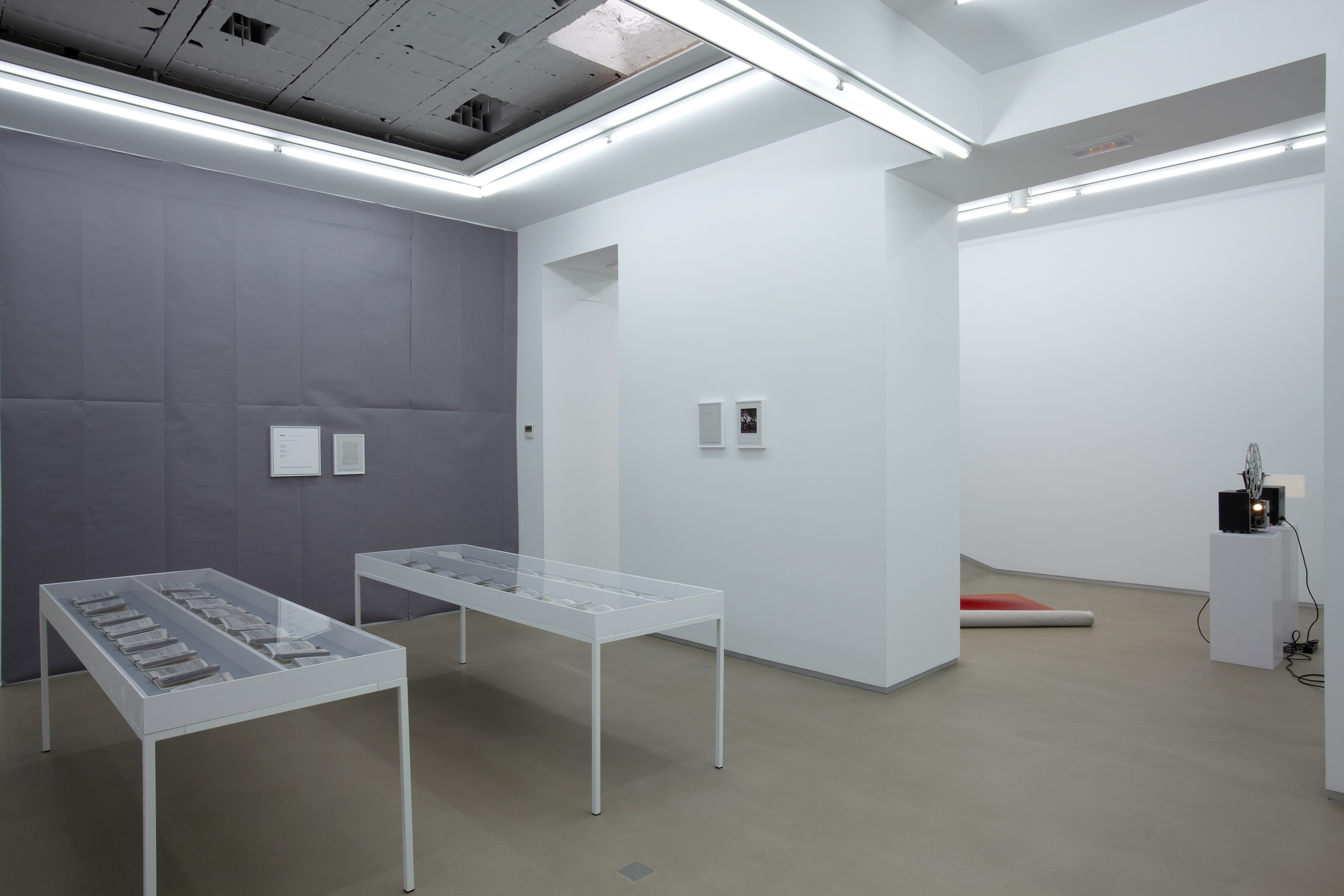
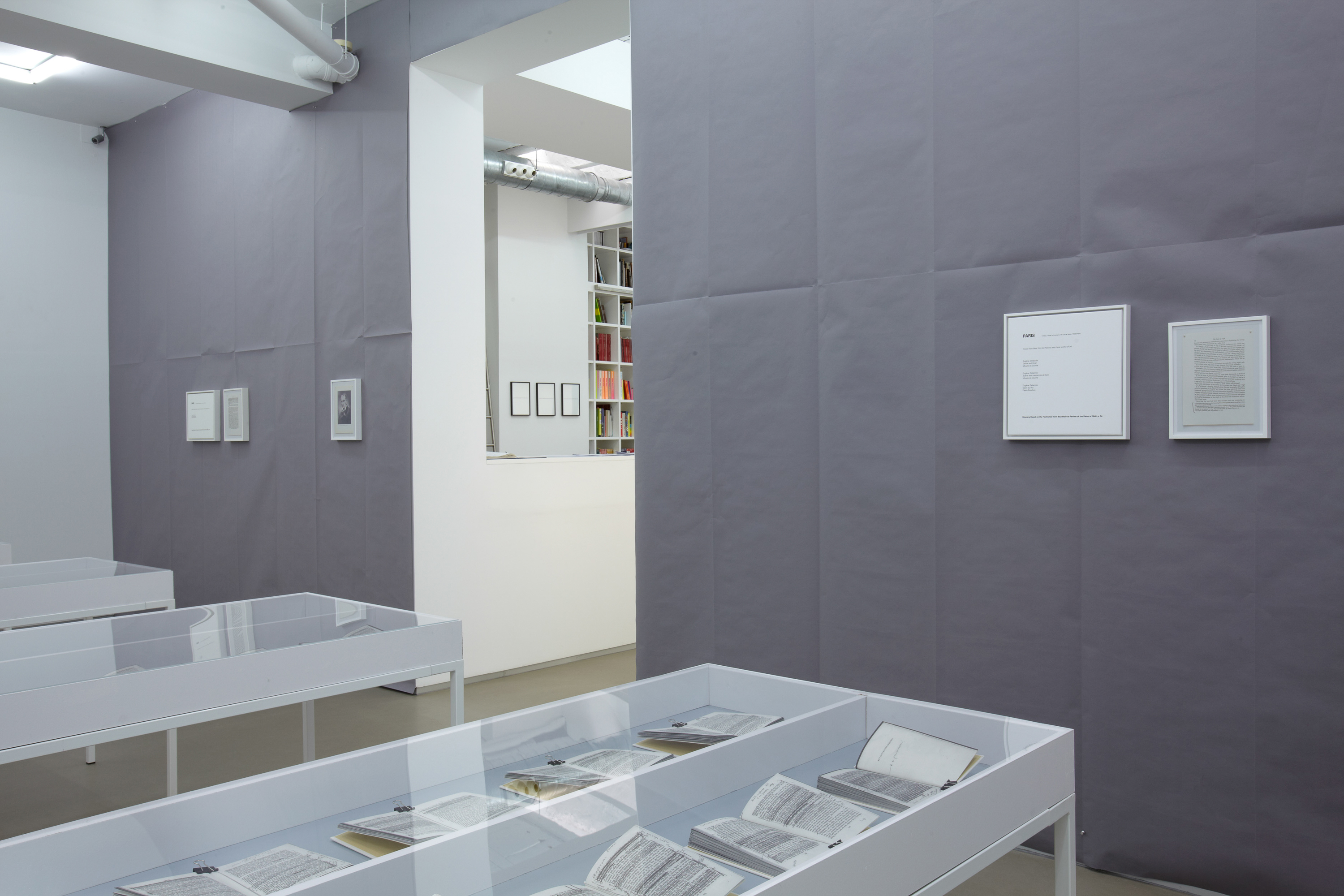
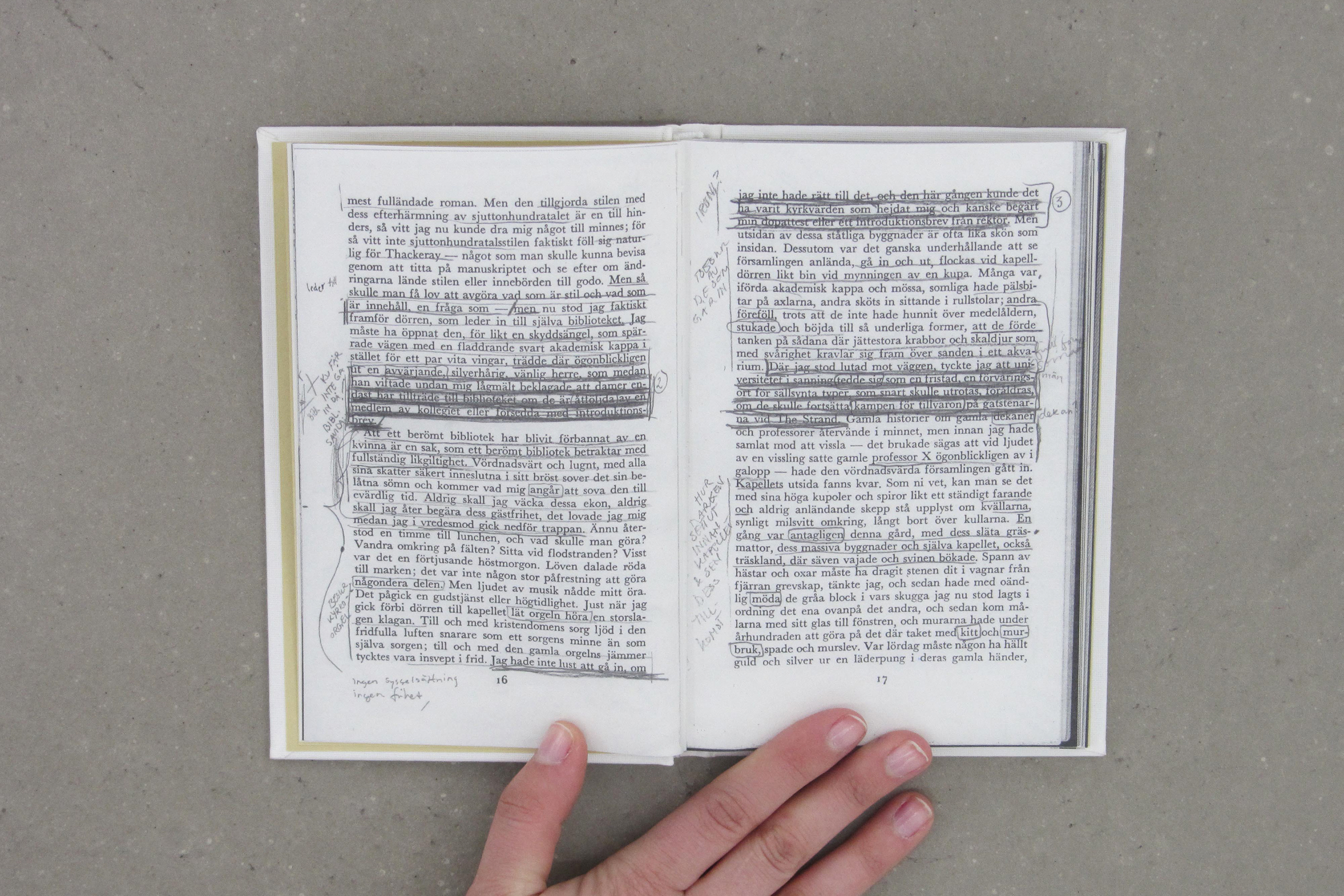
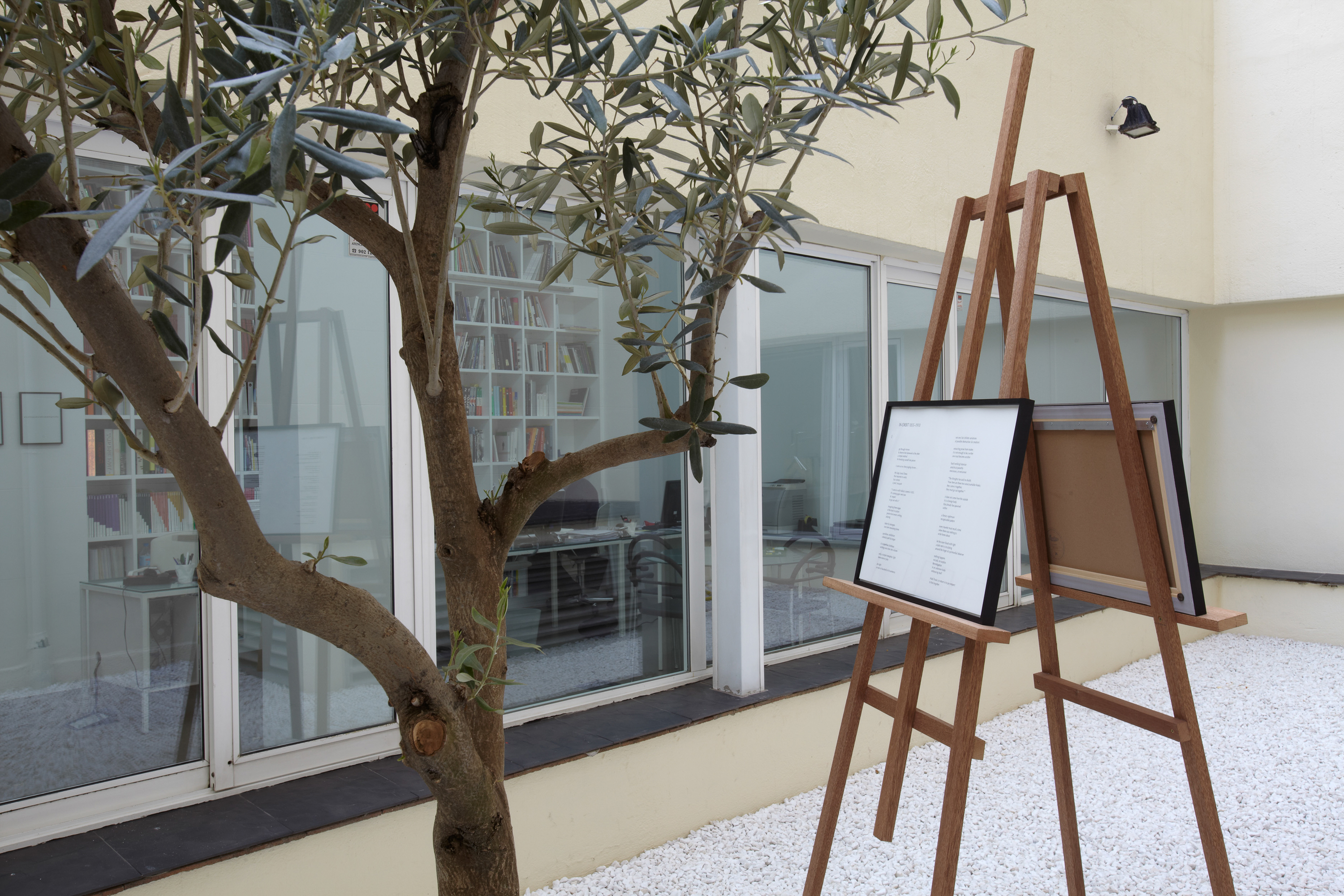
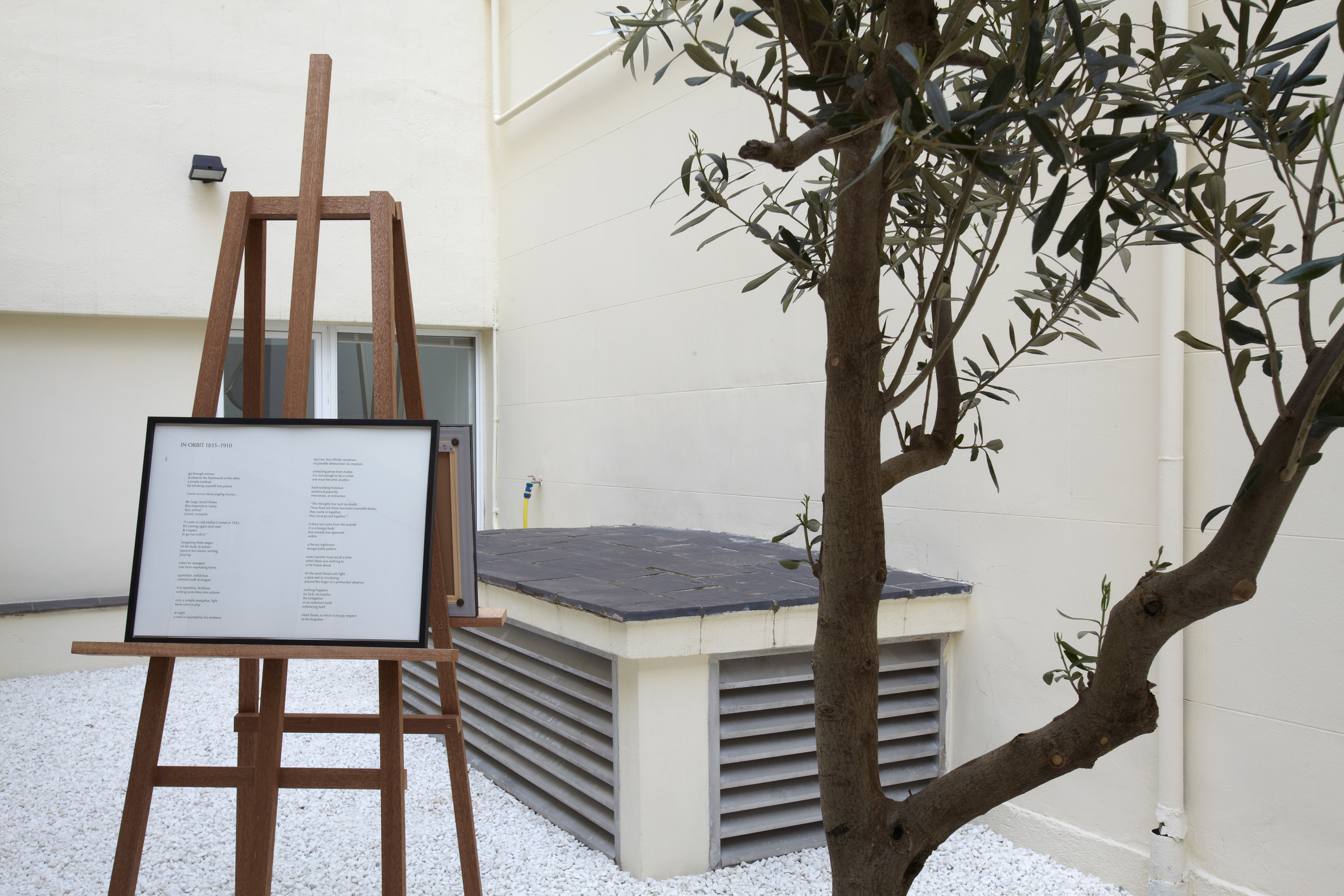
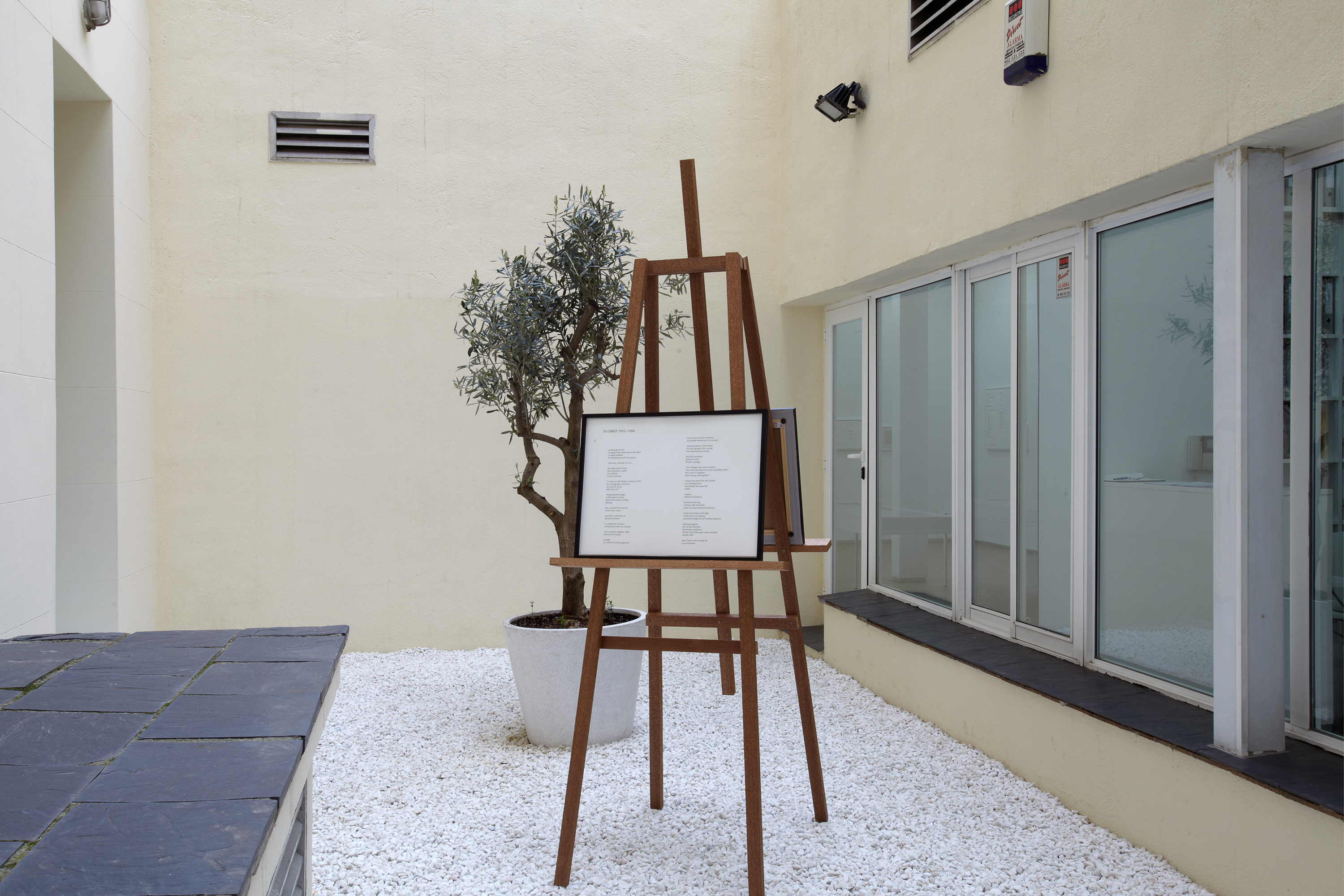
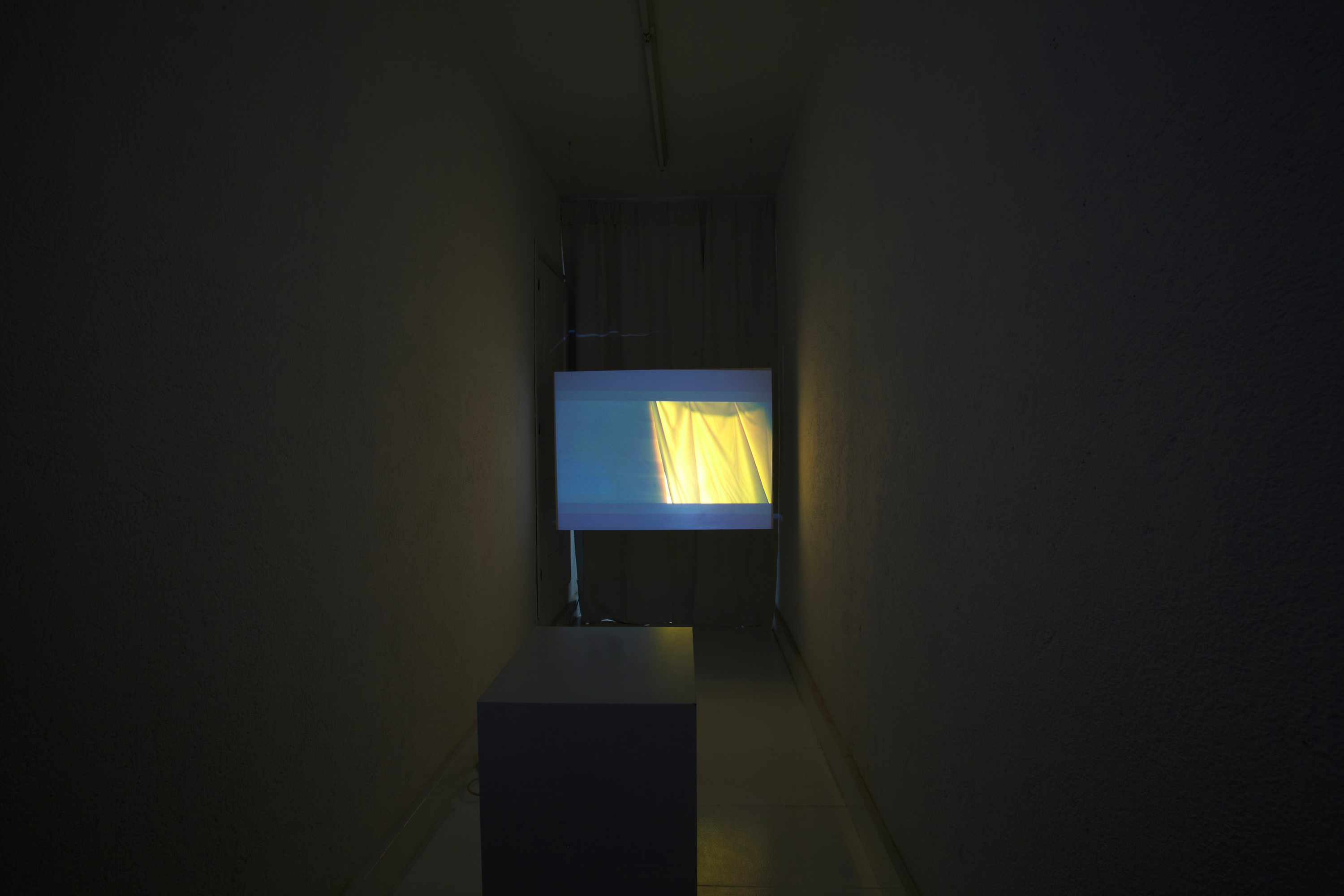
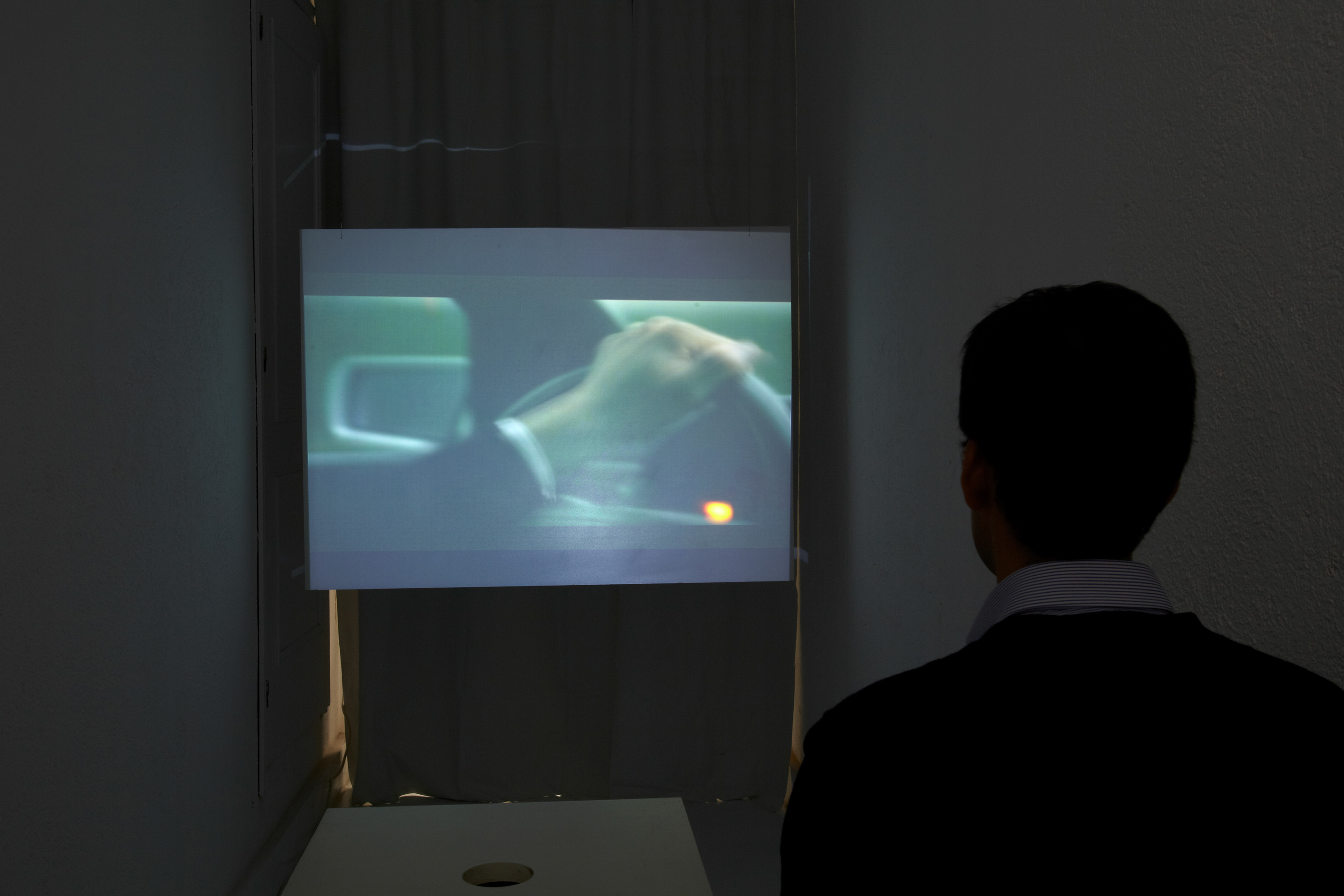
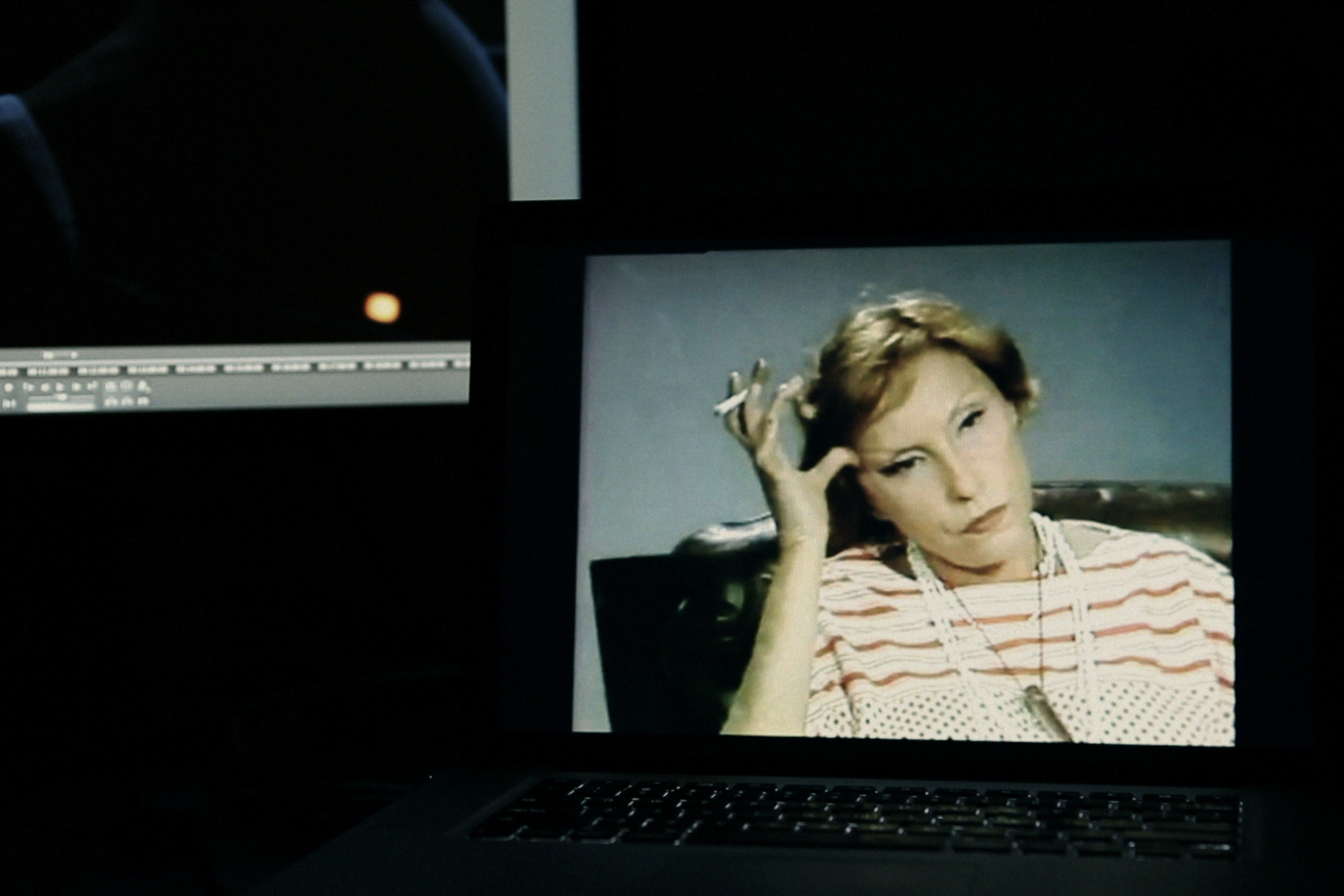
In her trajectory, Dahlberg has been investigating how narratives are constructed and mediated in relation to political representation, history and identity. This work includes an ongoing investigation into the logic of the archive as a tool for the work of collective memory, process that we can observe in the two installations presented at the gallery.
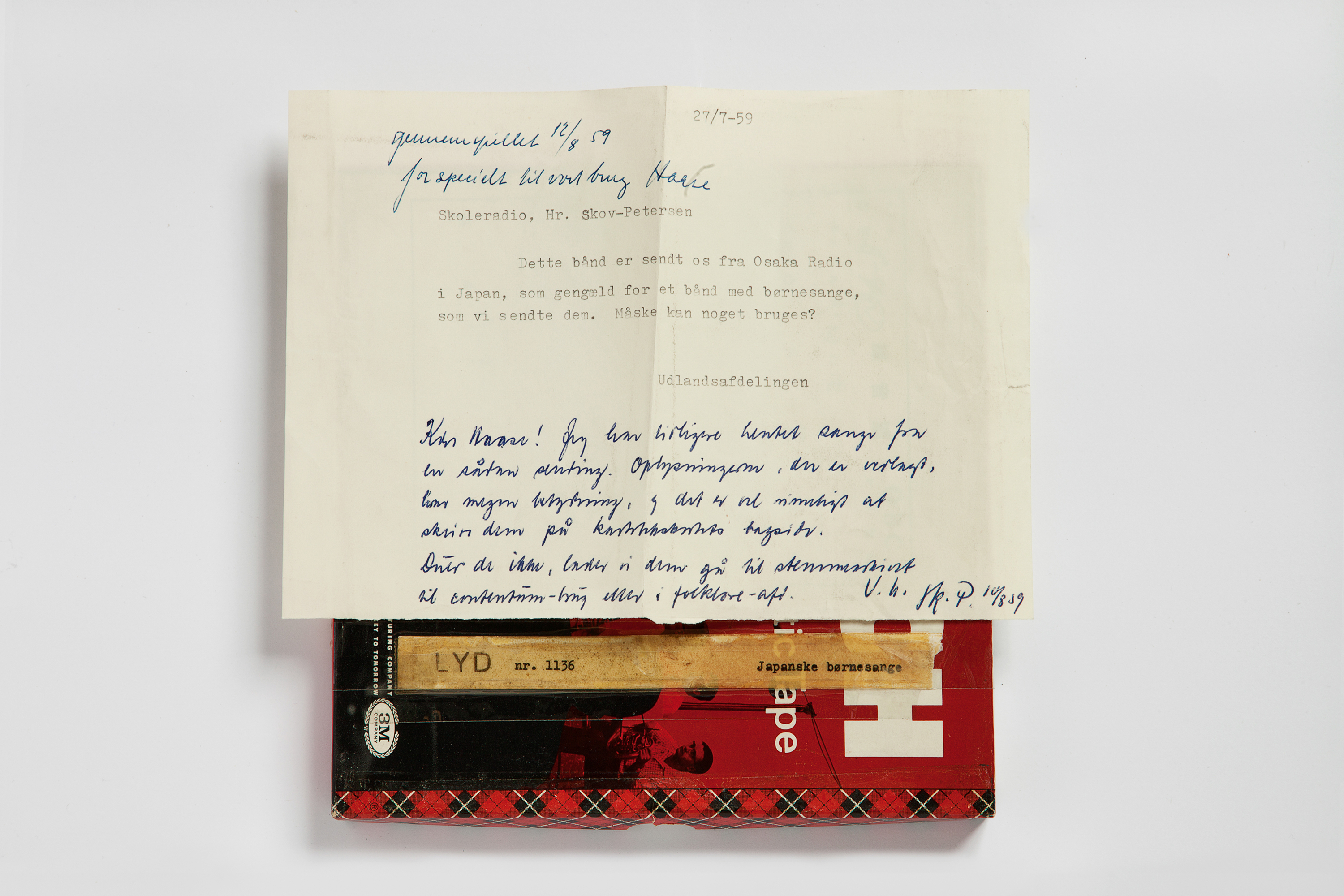
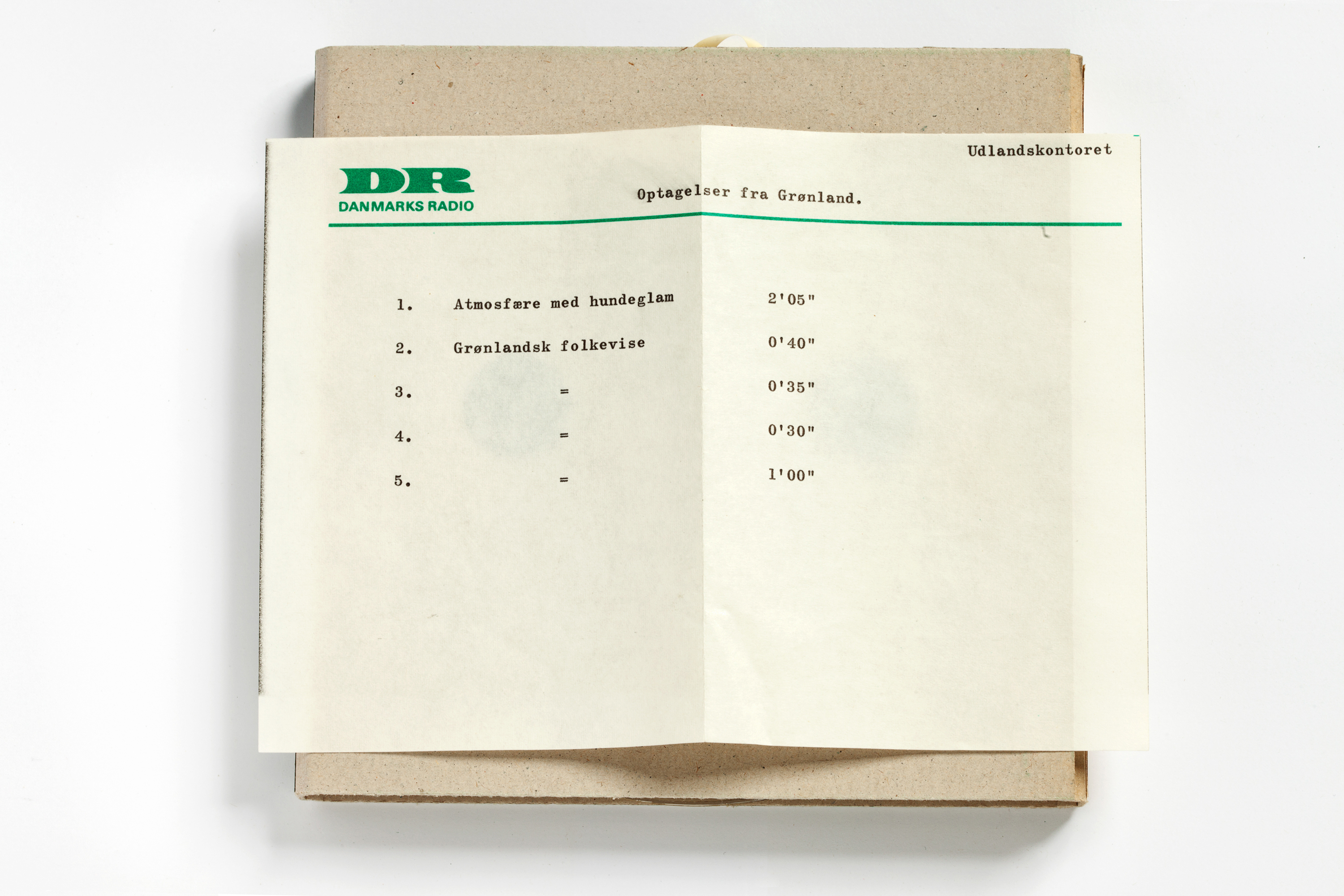
The Sound Archive is a work in progress that comes out of an invitation to be part of a research project between the University in Copenhagen and the major public service media producer in Denmark (DR). For the past few months Dahlberg has been engaged in doing research at the DR Archive (Danish Radio Broadcasting Corporation). This corporation is a license-financed public institution that was founded in 1925. The mission of the archive is to preserve the broadcasts of the national radio as well as its history, dating back to the early days of radio broadcasting.
Dahlberg saw in this invitation the opportunity to develop further, the activity of archiving and to go deeper into the studies of its meanings, much related to her work.
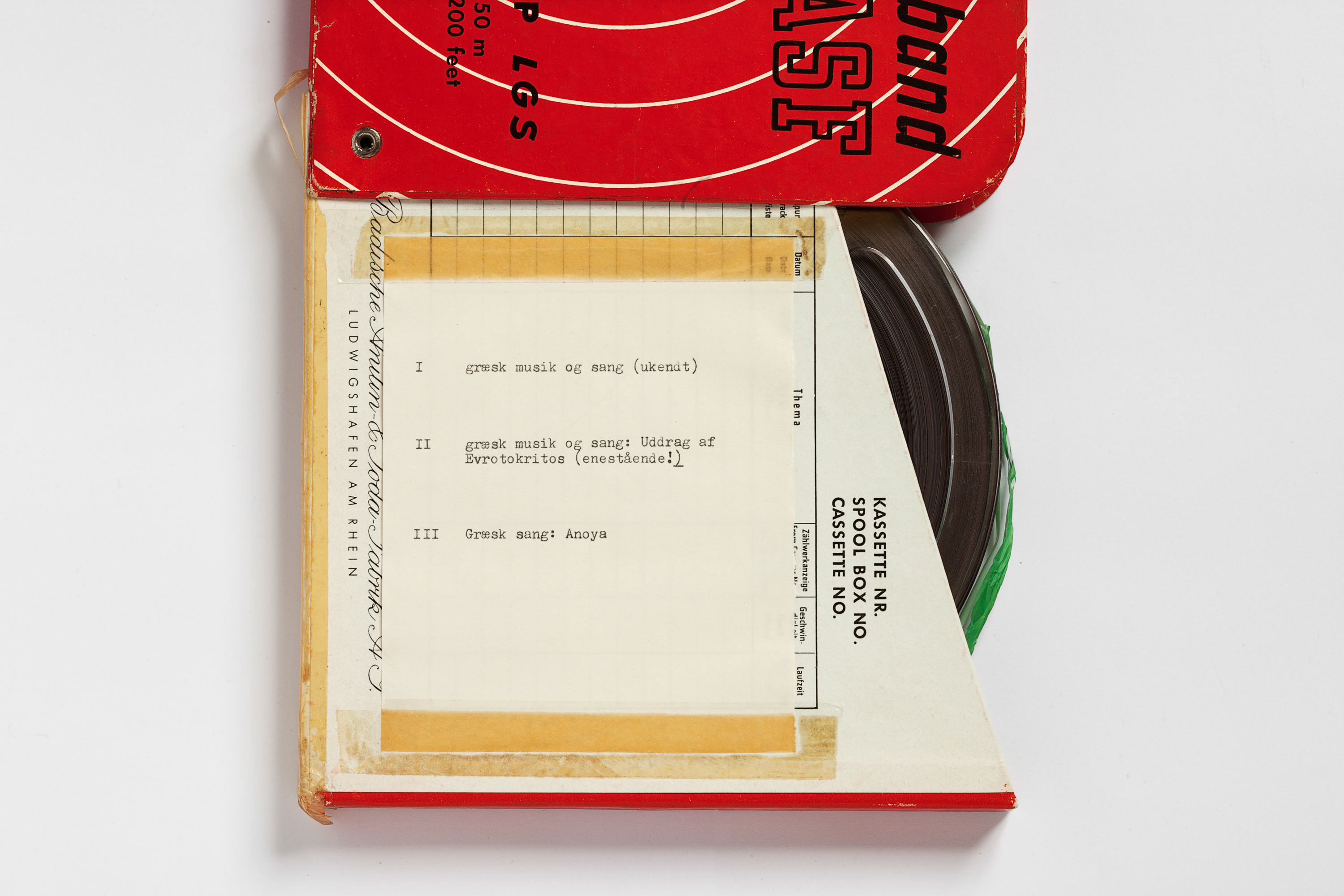
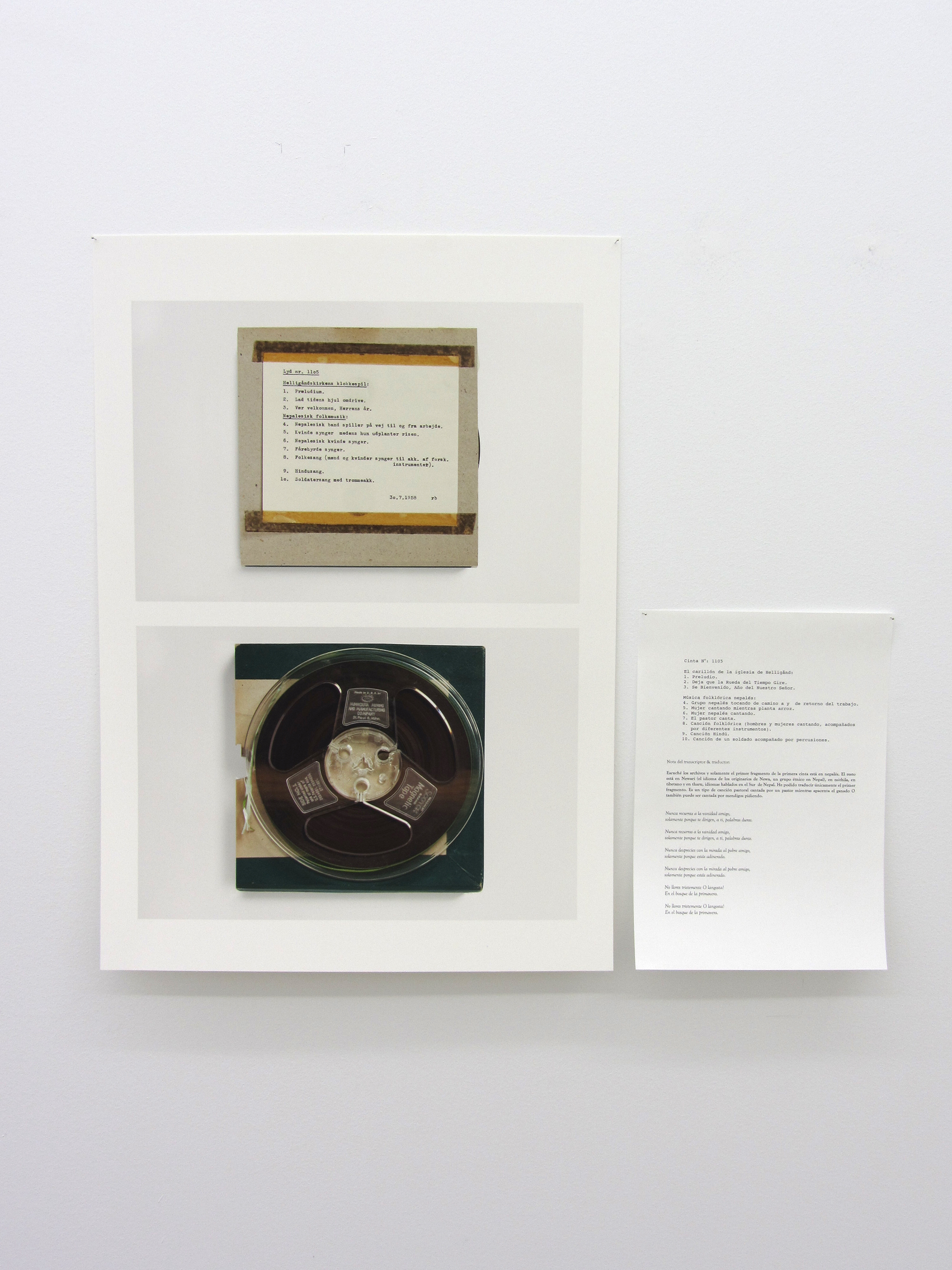
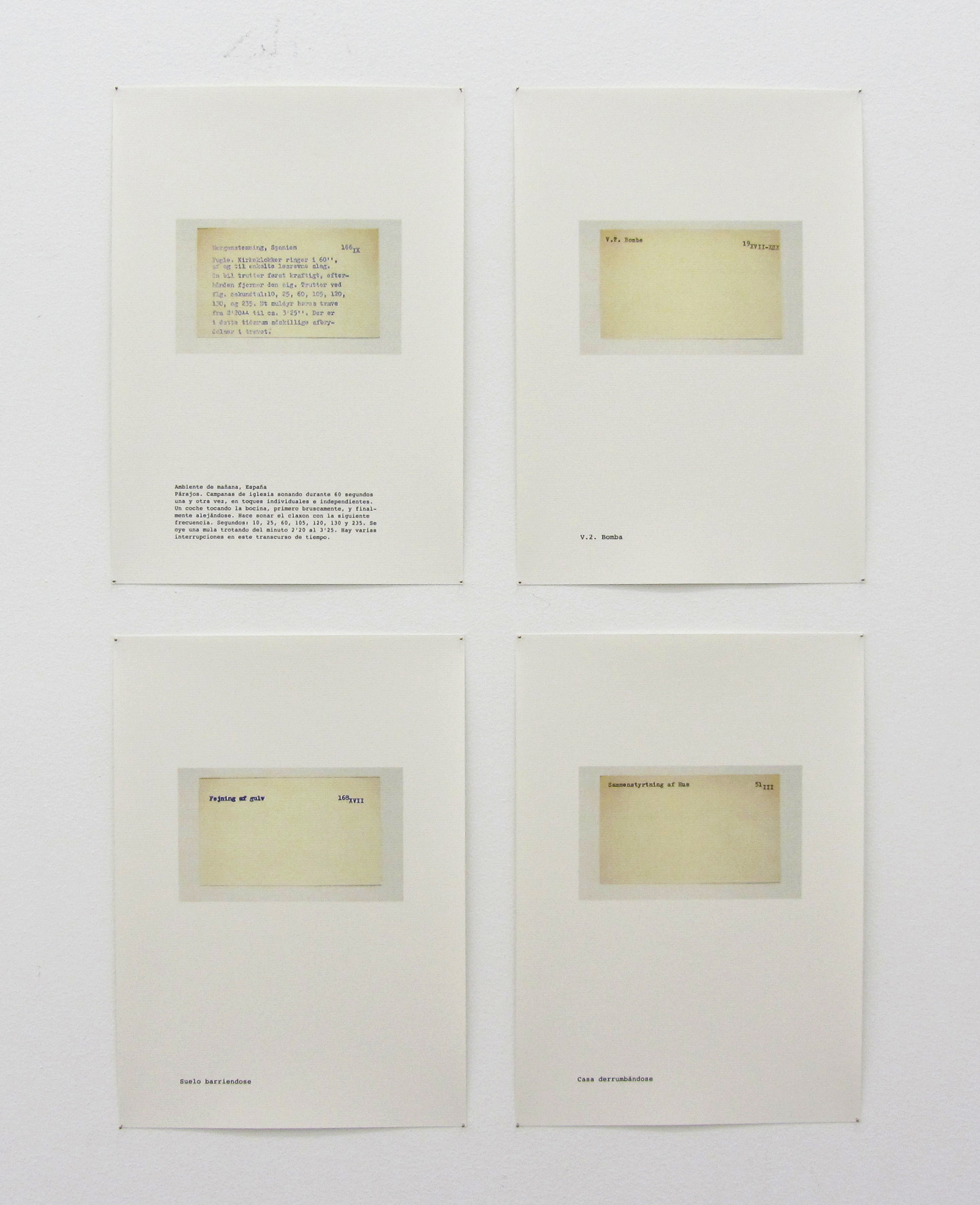
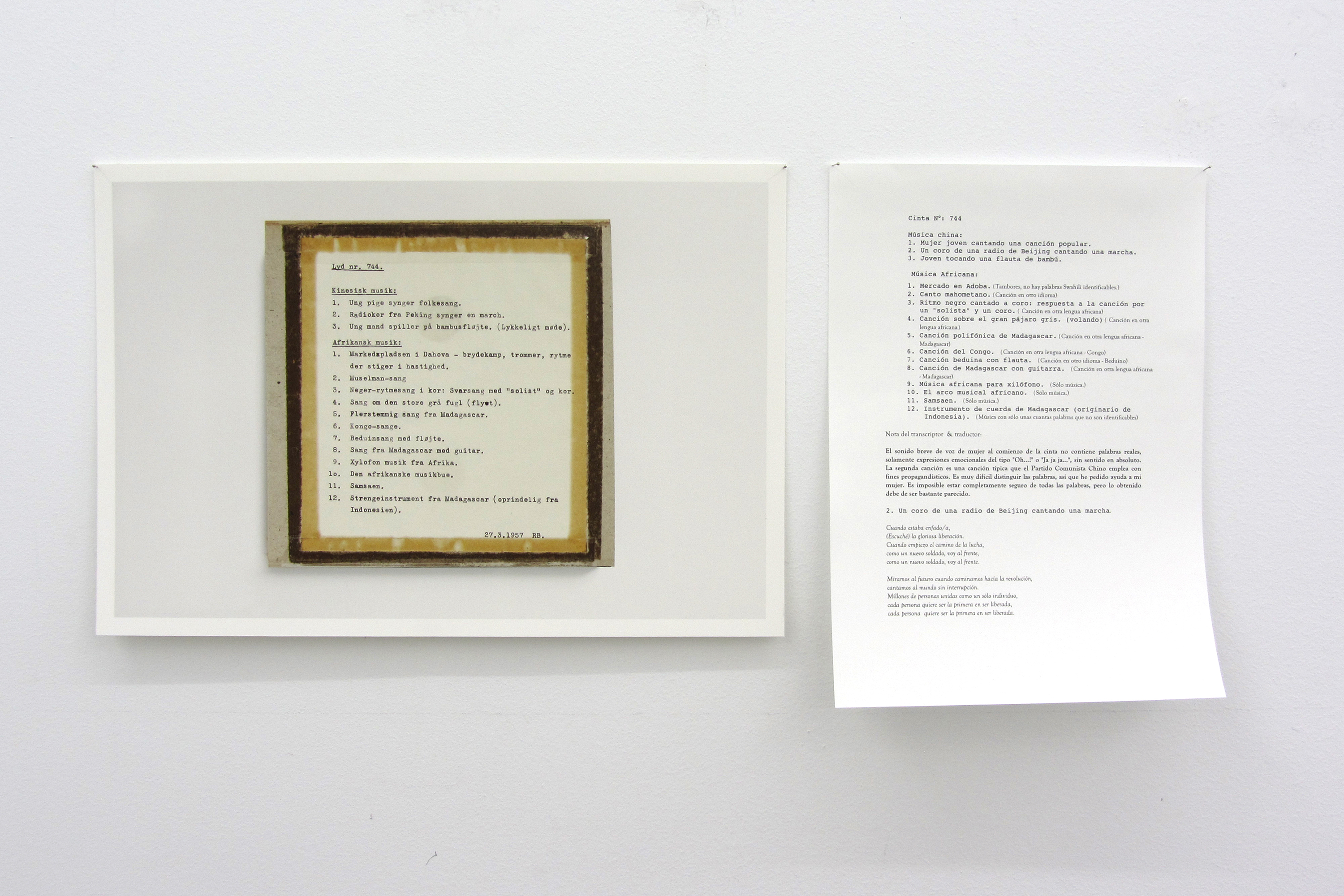
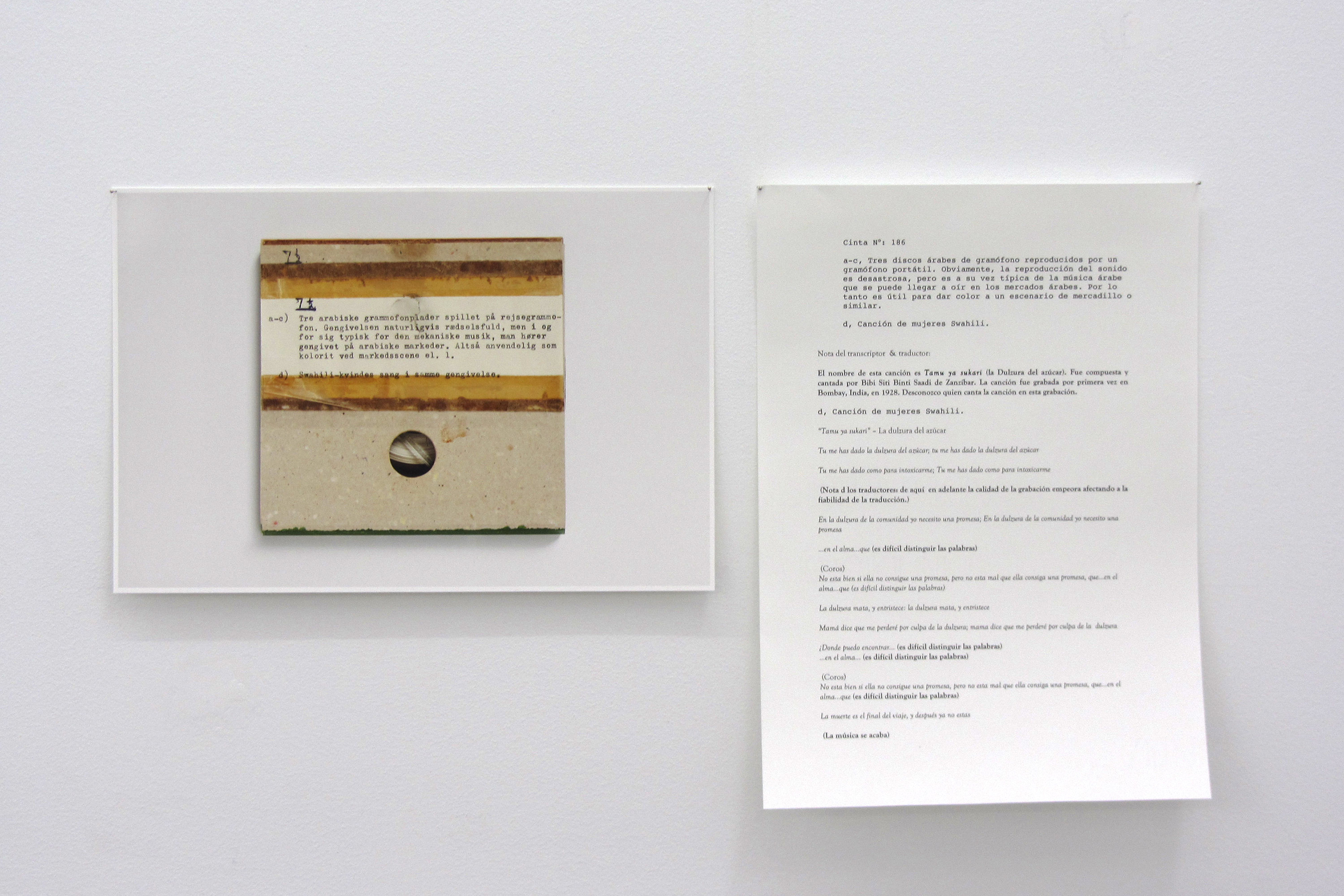
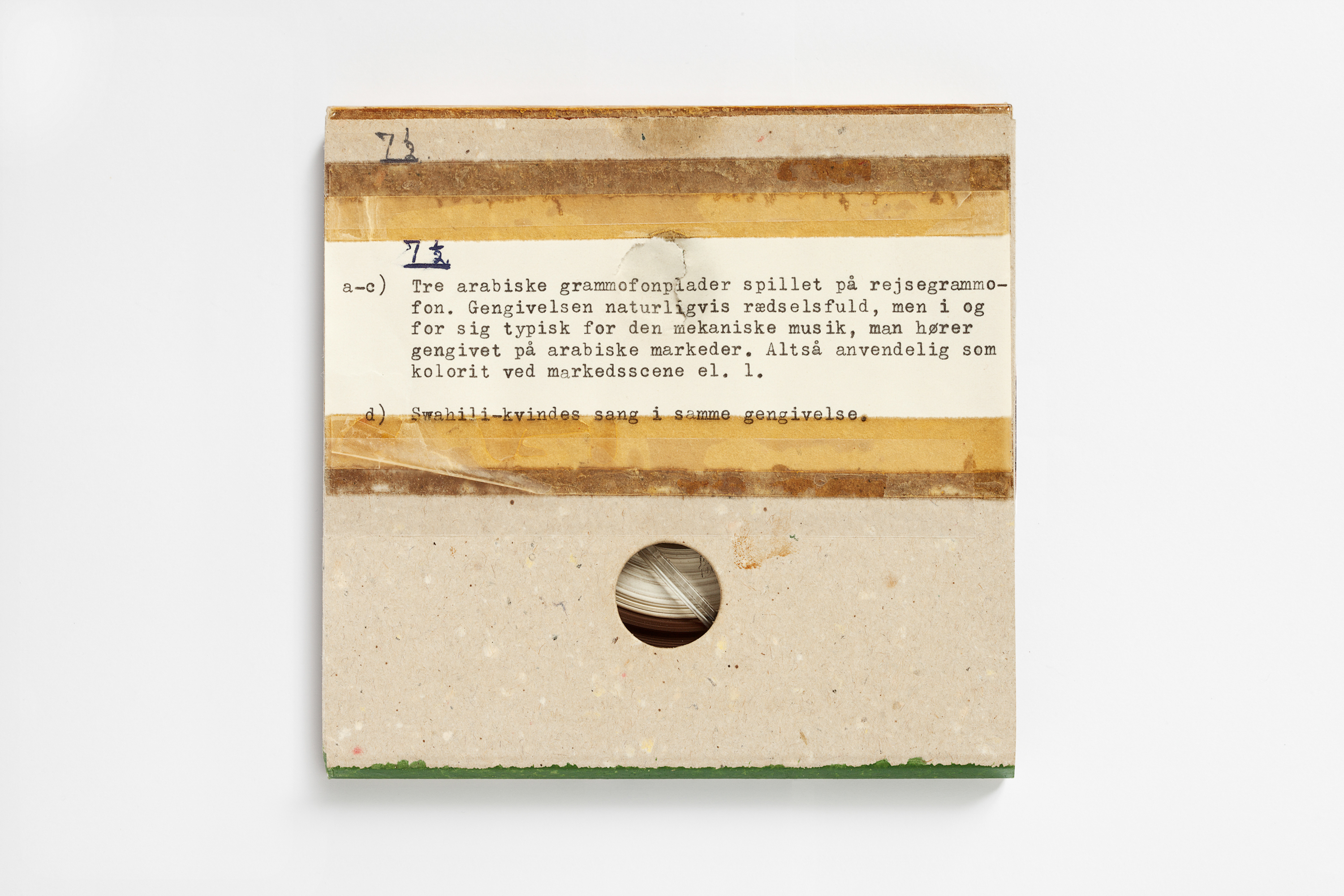
For this project she has engaged in the so-called “sound archive”. This part of the archive consists of a large collection of sounds that are meant to give context, or to illustrate an environment, for the production of radio programs. These might be for example the sound of birds, the Atlantic Ocean or the street of a specific city. But in this archive there are many recordings that are not only sound, but also language. These are first and foremost early recordings from countries and places where the language for different reasons (due to lack of resources or presumed importance) was inaccessible for the person who made it. It might be early recordings from
Greenland or travels through Africa or the Middle East.
Although it is mostly impossible to restore the identity or even the geographical location of the people singing or speaking in these tapes, Dahlberg is interested in bringing back to light their narratives, concealed within the logic of this specific archive. Until that day, nobody had got real interest in this material, apart from serving as a background sound for the radio programs. By classifying it for the first time according to its content, Kajsa revalorizes it as a language.
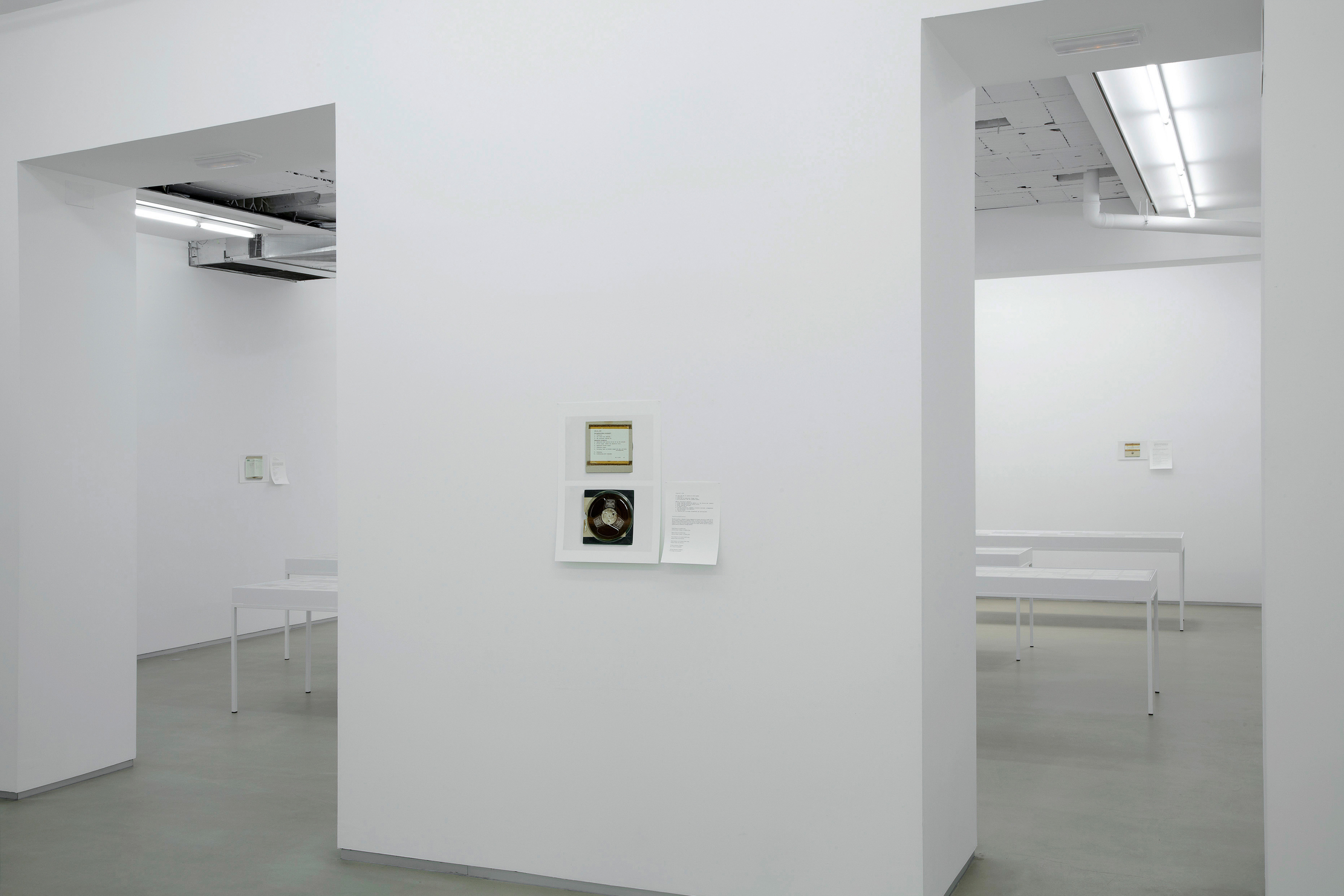
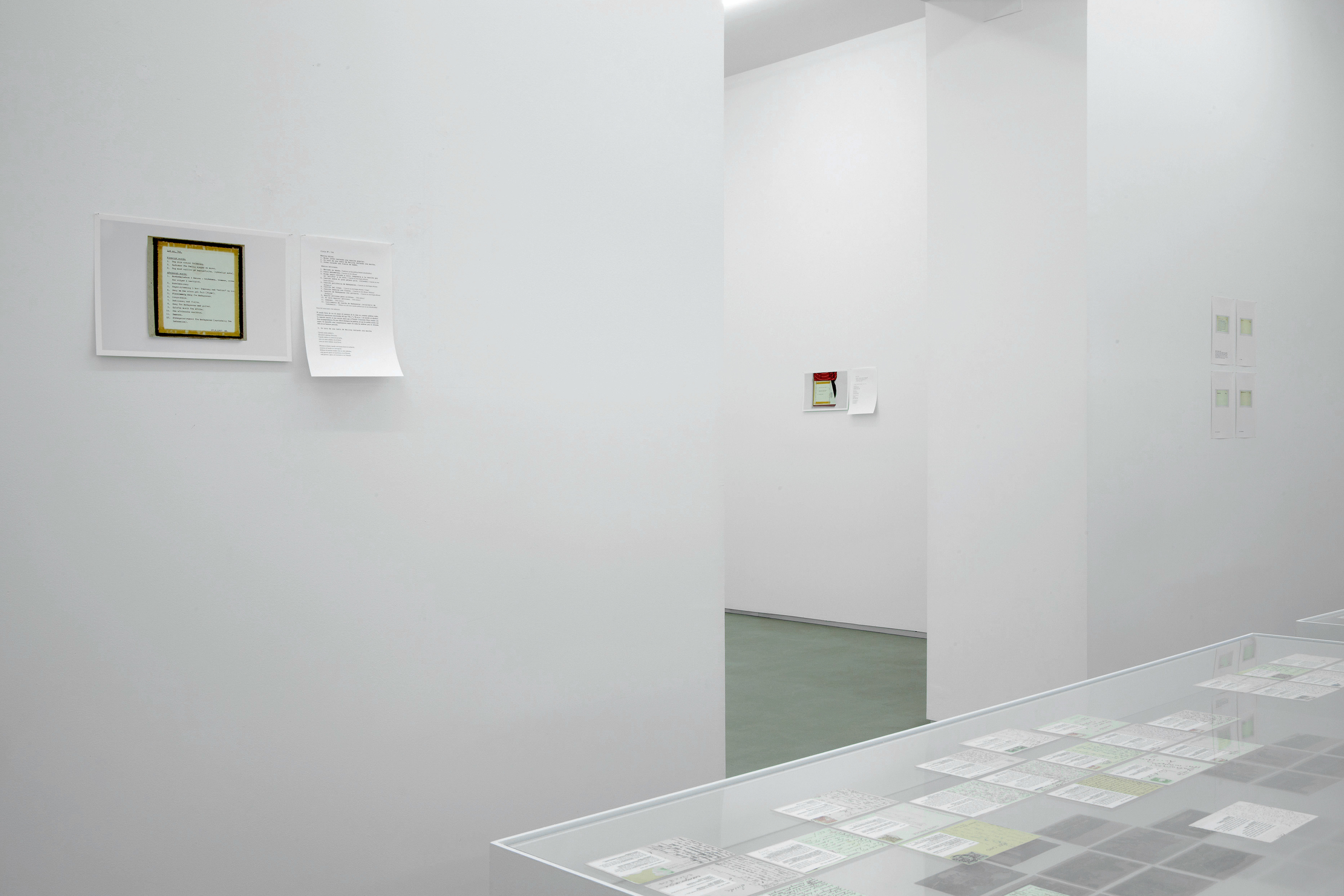
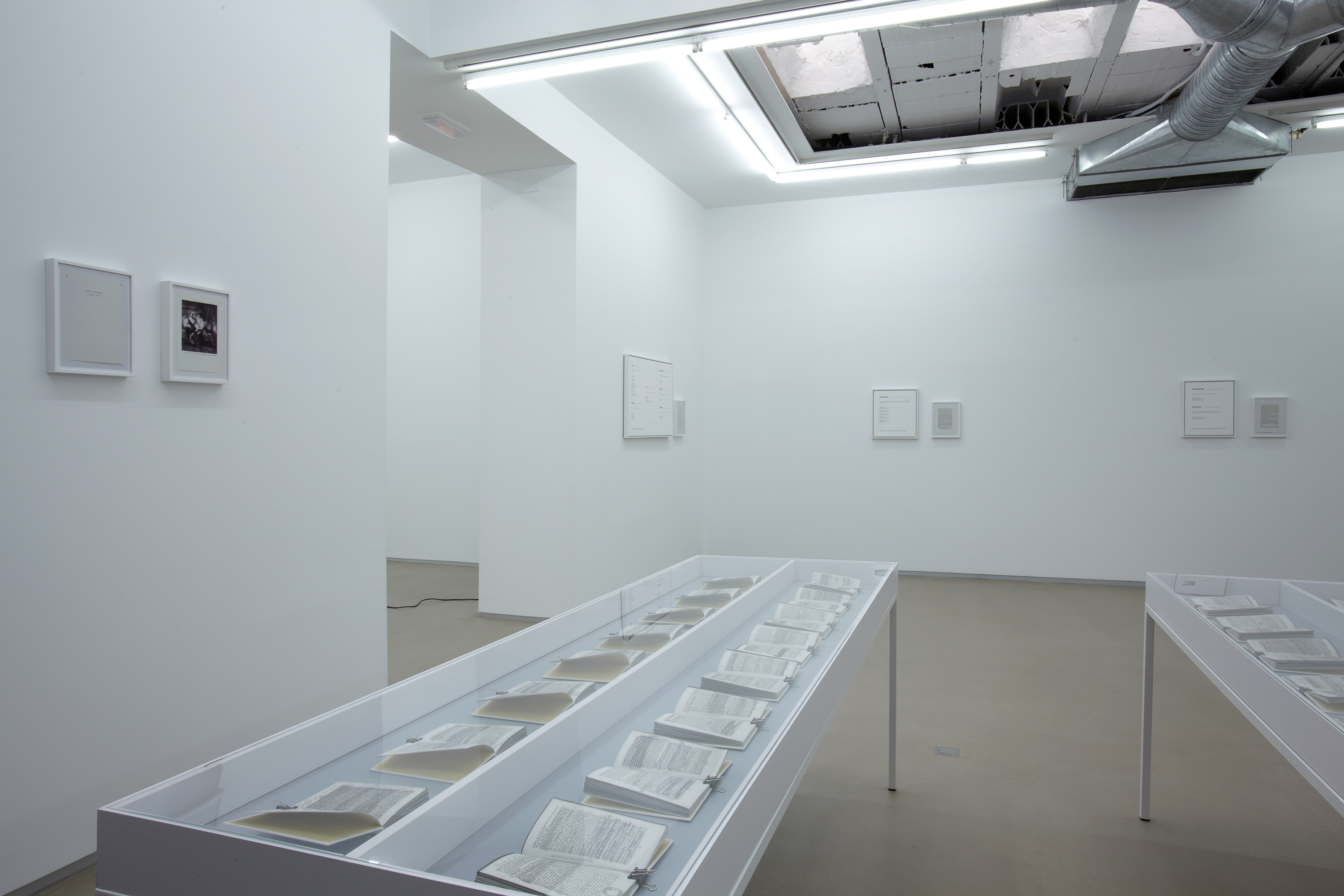
The work presented in the gallery consist of prints of some of the tapes found in the archive recorded sometime during the 40’s and 50’s, together with content transcribed and translated upon request from the artist. The final project will be presented next year as part of a solo show curated by Trine Friis S ørensen at the Museum for Contemporary Art in Roskilde in Denmark.
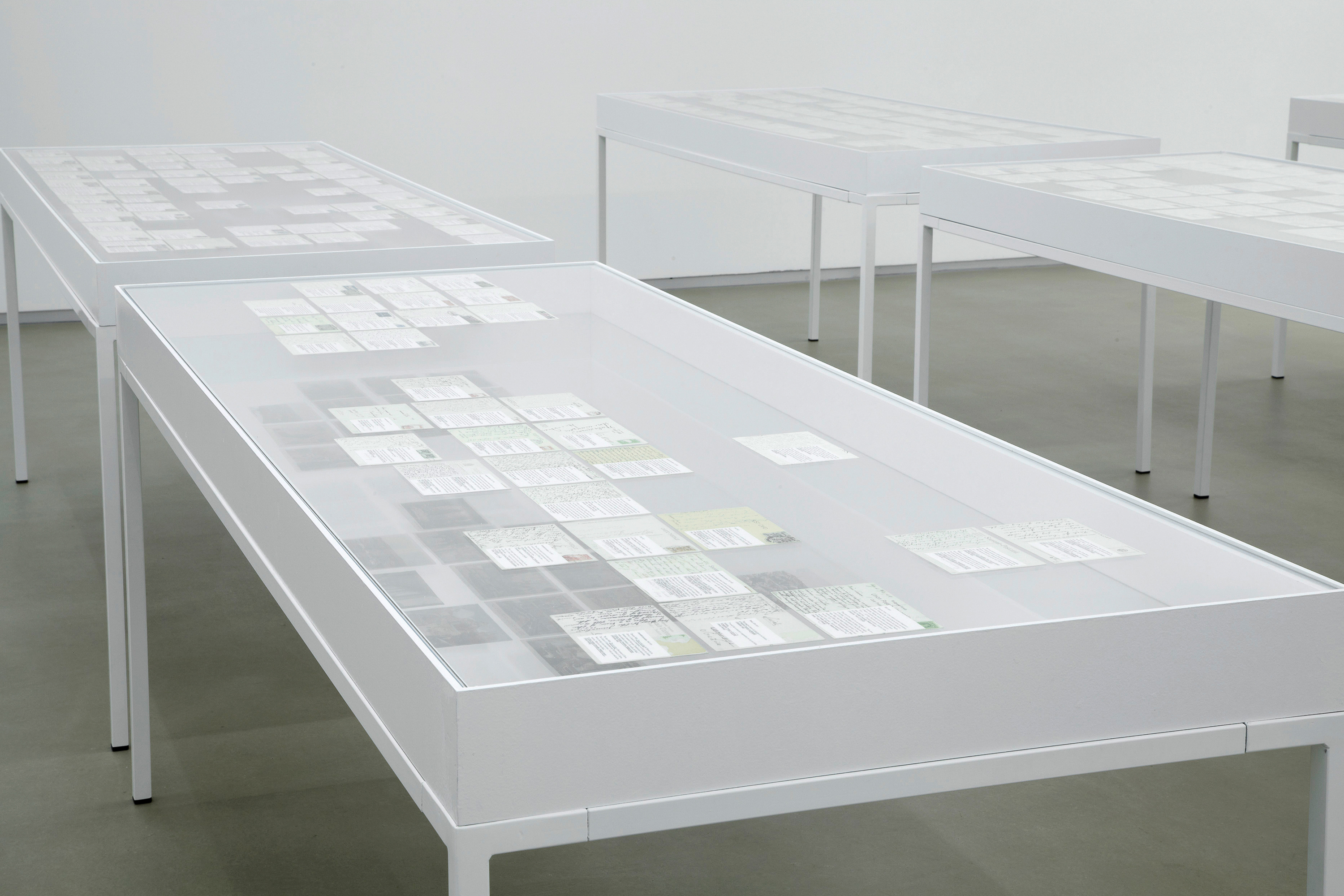
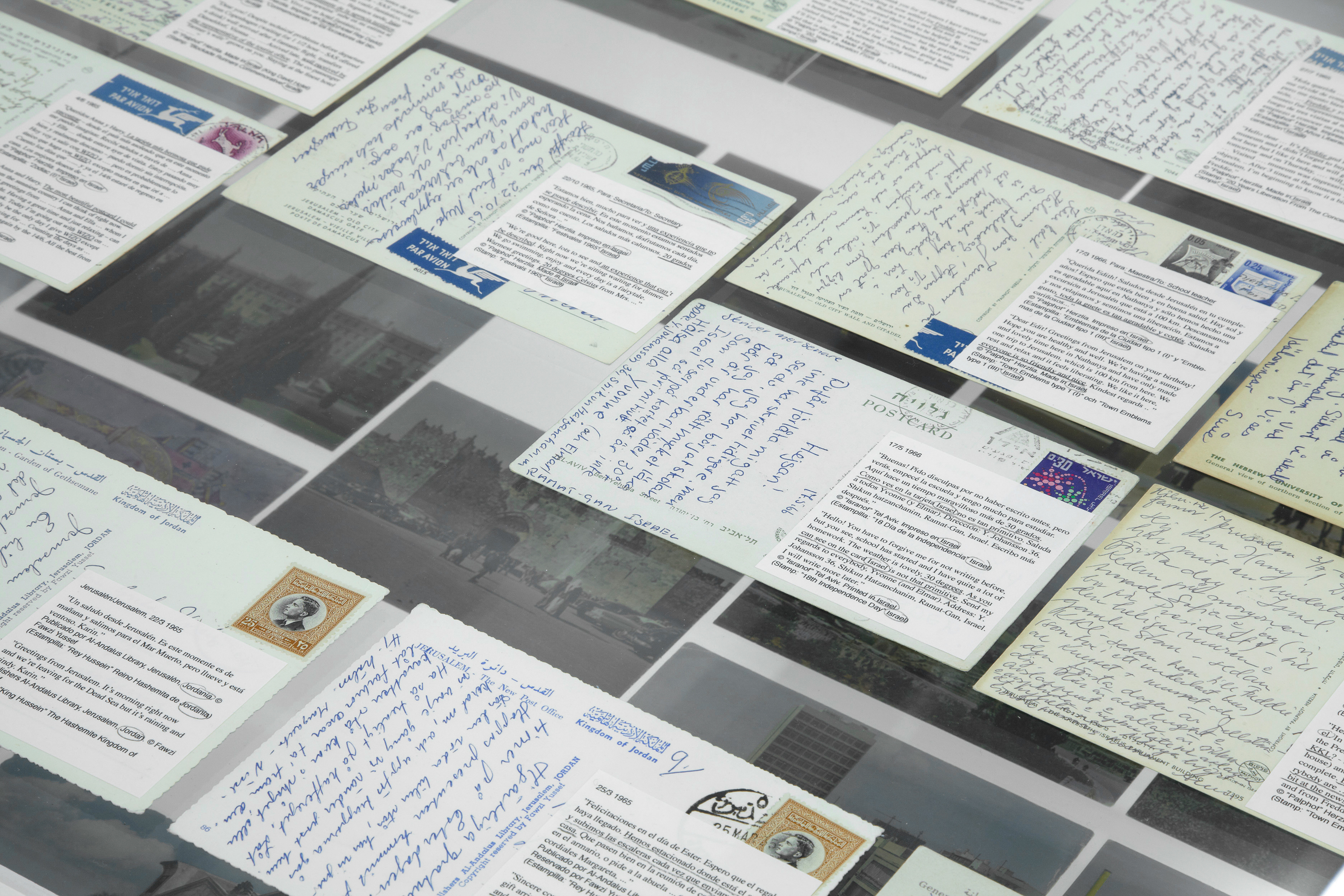
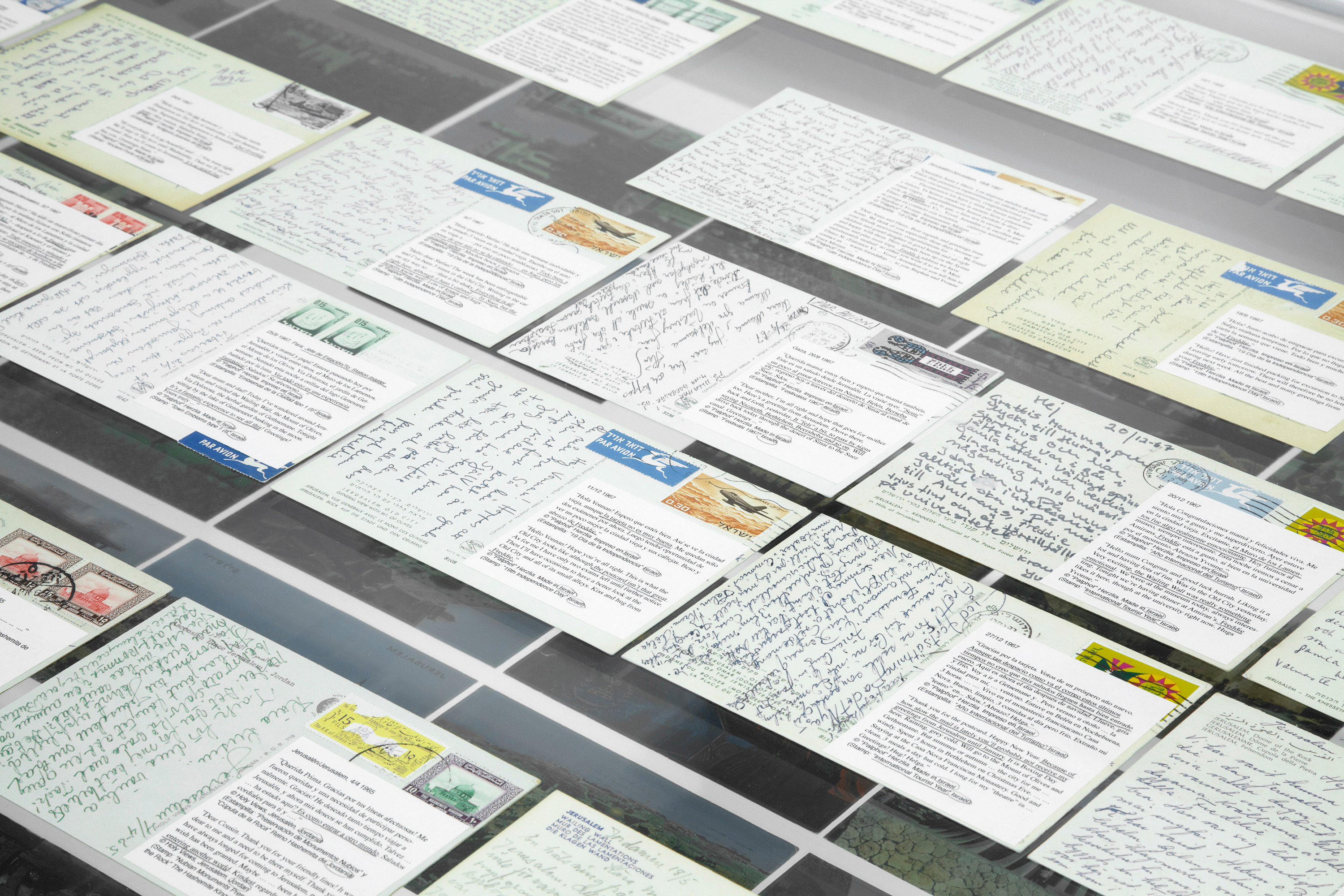
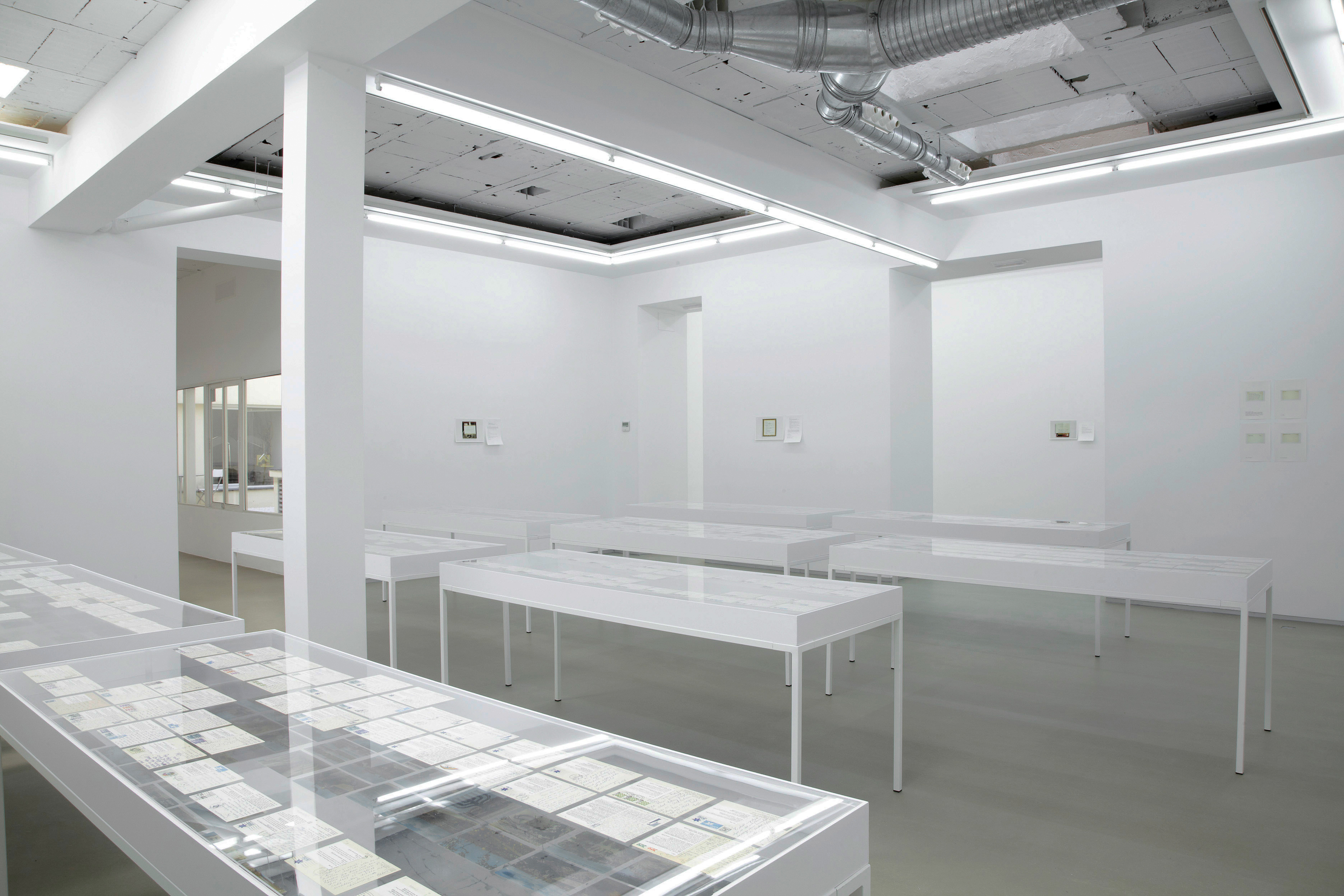
The second installation, No unease can be noticed, all are happy and friendly, consists of a collection of about 600 postcards sent from Jerusalem to Sweden by tourists, immigrants and travelers between March 26, 1910 and January 24, 1999. The cards, which were bought from second-hand bookstores and stamp collectors all over Sweden, stretch over a period of nearly one hundred years. For the installation, the cards have been ordered and categorized according to the content of the messages that are transcribed together with the name of the stamp as well and the copyright of the image. The installation thematises how a community is constituted and perceived from the outside, but this time from the point of view of Dahlberg’s own community: her Swedish compatriots visiting the city of Jerusalem.
The artist starts from her position as a traveller from Sweden whose perception of community is shaped by certain experience and ideas, such as the Swedish welfare state, whose communal engagement differs markedly from the interests of an occupation. Diplomatic relations between Sweden and Israel have been disturbed on many occasions, for example after the Six-Day War in 1967.From this perspective and guided by her interest in how political events might be reflected in tourist experience, Dahlberg collected the postcards and as a result has composed the image of a collective tourist perspective which only partly reflects political realities. Many texts underline the beautiful weather and the density of tourist attractions, or describe the religious events of a pilgrimage elluding the political situation. Some postcards, however, could serve as historical documents.
Kajsa Dahlberg’s work has been shown in biennials and group exhibitions such as: 8 Bienal do Mercosul, Brazil, Based in Berlin and Turku Biennial in 2011, Manifesta 8, Moderna Museet in Stockholm and at Lunds Konsthall in 2010, Al-Ma’mal Foundation for Contemporary Art in Jerusalem, The Kitchen, New York and The Power Plant in Toronto in 2009, The 1st Athens Biennial, The Prague Biennial #3 and at The Royal College of Art in London in 2007. In 2007 she had her first extensive solo show at Index in Stockholm. She is currently participating in the collective Contarlo todo sin saber cómo at the CA2M Centro de Arte Dos de Mayo in Madrid. Dahlberg received her MFA at the Malmö Art Academy in 2003 and was a studio fellow at the Whitney Independent Study Program 2007/2008.
*Translators of the texts from English / Swedish to Spanish: Clara López, Alfredo Pernin.